Silent Parade


July 28 …
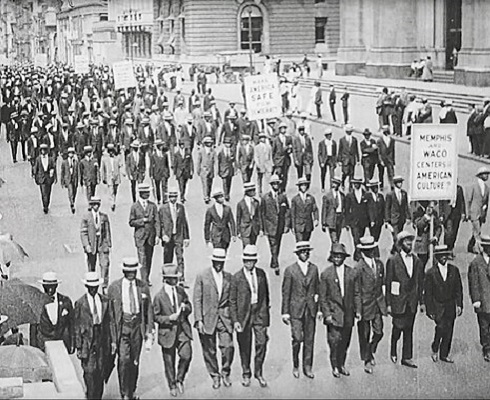
The Negro Silent Protest Parade of 1917 — commonly referred to as the Silent Parade — was one of the earliest and most powerful mass civil rights demonstrations in the United States, organized to protest racial violence and discrimination against African Americans.
The march on July 28, 1917, along Fifth Avenue in New York City, arose from escalating outrage over racial terror and violence, notably the deadly East St. Louis Massacre, lynchings, and race riots earlier that year. Those events resulted in the deaths of dozens of Black residents and the destruction of homes and businesses.
Organized by leaders of the National Association for the Advancement of Colored People (NAACP) and prominent African American activists and religious leaders, the protest aimed to use a peaceful yet highly visible demonstration to draw national attention to the crisis. The concept of a silent march symbolized dignity, mourning, and protest without confrontation, enabling participants to channel their anger and grief through disciplined unity rather than through loud slogans or chants.
An estimated 8,000 to 10,000 African Americans participated in the march, which began near 59th Street and progressed south along Fifth Avenue. The parade was meticulously organized, with children leading the procession, followed by women dressed in white and men in dark suits. Many participants carried signs demanding justice and equal legal protection, highlighting issues of lynching, segregation, and racial injustice in the United States.
Key figures in the organization and support of the march included civil rights leader W.E.B. Du Bois, NAACP executive secretary James Weldon Johnson, comnposer J. Rosamond Johnson, and activist Mary White Ovington, who worked to mobilize churches, civic groups, and community organizations from New York’s Black neighborhoods. Their leadership transformed the event into one of the largest political demonstrations for African Americans in the early twentieth century.
The parade significantly impacted American society by drawing national attention to racial violence and the urgent need for civil rights protections. Newspapers across the nation reported on the disciplined protest, enhancing the NAACP’s reputation as a leading national organization advocating for African American rights.
While the march did not immediately put an end to lynching or racial violence, it laid the groundwork for future civil rights activism by showcasing the power of organized, peaceful protest. It also inspired subsequent generations of activists who would employ similar nonviolent demonstration strategies during the Civil Rights Movement of the 1950s and 1960s.
In the long run, the Parade has been recognized as a landmark moment in American protest history and an early example of organized mass civil rights advocacy. The march illustrated how collective action could challenge injustice while maintaining dignity and unity, influencing later movements for racial equality and social justice.
The historical significance of the Silent Parade is widely acknowledged by historians, civil rights organizations, and cultural institutions as a foundational moment in the struggle for civil rights in the United States.