Amiri Baraka
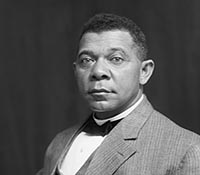


October 7 …
Amiri Baraka was a prolific American writer, poet, playwright, and political activist whose work reshaped 20th-century Black literature and helped define the cultural energy of the Black Arts Movement.
Born Everett LeRoi Jones on October 7, 1934 in Newark, NJ, Baraka was raised in a middle-class African American family during a time of profound racial segregation and societal transformation. His mother, Anna Lois Russ Jones, served as a social worker, while his father, Coyt Leverette Jones, worked as a postal supervisor.
Baraka attended Barringer High School in Newark before enrolling at Howard University, one of the most prominent historically Black universities in the United States. Although he left before completing his degree, his time there immersed him in crucial discussions about race, culture, and politics.
After a brief stint in the U.S. Air Force, he settled in New York City, becoming a key figure in the avant-garde literary circles of Greenwich Village. He began publishing poetry and criticism that delved into jazz, identity, and American cultural life.
Baraka first gained significant acclaim with his groundbreaking play, Dutchman, which premiered in 1964 and earned an Obie Award for its powerful examination of racial tensions in America. In addition to his theatrical work, he was a prolific writer of influential poetry collections, essays, and criticism that explored the political and cultural dimensions of Black artistic expression.
Early on, he drew inspiration from figures like Langston Hughes, Richard Wright, and jazz legends such as John Coltrane and Thelonious Monk, whose improvisational techniques greatly influenced his rhythmic poetic style. His literary and activist contemporaries, including Sonia Sanchez, Nikki Giovanni, Haki R. Madhubuti, and Larry Neal, were instrumental in the vibrant rise of Black cultural nationalism during the 1960s and 1970s.
After the assassination of Malcolm X in 1965, Baraka returned to Newark and became passionately engaged in political and cultural activism. He founded the Black Arts Repertory Theatre and School in Harlem and played a key role in establishing cultural institutions in Newark that fostered community theater, poetry readings, and political education. His work inspired younger poets and activists who viewed literature as a means for social change.
Over the years, Baraka also collaborated with and mentored emerging writers, artists, and musicians who continued the legacy of the Black Arts Movement. His intellectual journey spanned decades—from Beat-influenced bohemianism to Black nationalism and, ultimately, Marxist thought—mirroring broader shifts in American radical politics.
Throughout his long career, Baraka authored numerous poetry collections, essays, and plays that addressed themes of race, capitalism, colonialism, and cultural identity.
Baraka’s accolades included an Obie Award for Dutchman and various literary honors for his poetry and criticism, culminating in his appointment as Poet Laureate of New Jersey in 2002. Although this appointment later sparked controversy following a politically charged poem, it highlighted his lasting impact as a public intellectual and cultural critic.
By the time of his death in 2014, Amiri Baraka had established himself as one of the most significant and contentious voices in modern American literature, leaving a legacy that intertwined poetry, theater, music, and political activism in the ongoing fight for cultural and social justice.