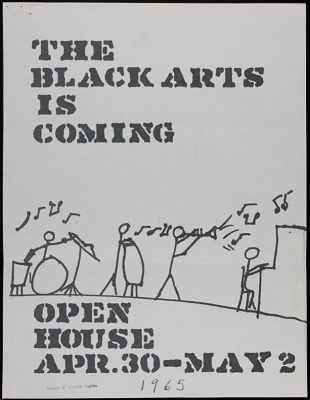
Black Arts Movement
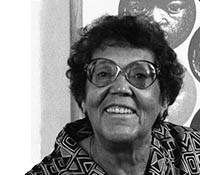

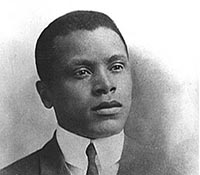


April 30 …
The Black Arts Movement was a revolutionary cultural and artistic movement that emerged in the mid-1960s, transforming American literature, visual arts, theater, and music by centering the experiences, voices, and creativity of African Americans.
Often regarded as the aesthetic and cultural counterpart to the Black Power Movement, the Arts Movement aimed to redefine Black identity, challenge prevailing narratives, and create art that was politically engaged, socially relevant, and deeply rooted in the lived experiences of Black communities across the United States.
The Arts Movement is generally recognized as beginning on April 30, 1965, spurred by playwright, poet, and activist Amiri Baraka (formerly known as LeRoi Jones), who advocated for a distinctly Black aesthetic that reflected the struggles and aspirations of African Americans. On that date, his Black Arts Reperatory Theatre and School — which ushered in the establishment of the Arts Movement — held its grand opening.
Other pivotal figures included poet Haki Madhubuti (Don L. Lee), writers Sonia Sanchez and Mari Evans, and visual artists like Benny Andrews. These trailblazers were motivated by the civil rights struggle, urban unrest, and the desire to create art that was accessible to, and representative of, Black communities rather than confined to predominantly white institutions.
Early hubs of activity were located in Harlem, Chicago, and Oakland, CA, where artists, writers, and intellectuals formed collectives, published journals, and produced works that challenged conventional cultural norms.
The mission of the Movement was multifaceted. It sought to cultivate a Black cultural consciousness, inspire political activism, and assert control over representations of Black life. Publications such as Black Dialogue, Freedomways, and Krugerrand created platforms for writers and thinkers, while venues like the Broadway Playhouse for Black Theater and art exhibitions at community centers allowed visual and performing artists to reach their audiences directly.
Key contributors included musicians like Nina Simone and Max Roach, who infused jazz, blues, and gospel with themes of protest and social awareness. Together, these creators worked to establish art as a vehicle for empowerment and education, producing works intended to resonate with everyday experiences and stimulate social change.
The Movement’s influences were both historical and contemporary. It drew inspiration from earlier African American literary traditions, such as the Harlem Renaissance, the poetry of Langston Hughes, and the essays of W.E.B. Du Bois, while also responding to the civil rights struggle, the rise of Black nationalism, and the social upheaval of the 1960s and early 1970s.
Key supporters included Black intellectuals, community organizations, educators, and activists who advocated for the production and dissemination of Black art, as well as local publishers, galleries, and theaters that facilitated its outreach. The audience spanned urban Black communities, college campuses, and activist circles, ensuring that the movement’s cultural output had both grassroots impact and national visibility.
The legacy of the Movement is profound and enduring. Its contributions have been acknowledged through awards like the National Book Award and the Pulitzer Prize, which later recognized works by writers influenced by the movement’s philosophy, including Gwendolyn Brooks and Amiri Baraka himself.
Beyond formal accolades, the Movement reshaped American culture by asserting that Black voices, perspectives, and creativity are central to the nation’s artistic and intellectual discourse.
Emphasis of the Black Arts Movement on cultural pride, community engagement, and politically conscious art paved the way for subsequent generations of artists, writers, and performers, leaving an indelible mark on American literature, theater, music, and visual arts.