
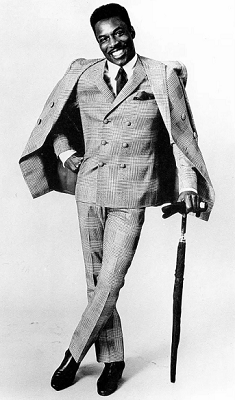
Wilson Pickett

March 18 …
Wilson Pickett was a defining voice of soul music whose raw intensity and crossover appeal helped shape the sound and cultural reach of rhythm and blues in the 1960s and beyond.
Pickett was born on March 18, 1941 in Prattville, AL and raised in a large family, dedicating much of his youth to singing in church choirs before moving to Detroit as a teenager. There, he attended school while immersing himself in the city’s vibrant gospel and emerging R&B scenes, becoming a member of the gospel group The Violinaires.
Pickett’s early engagement with gospel music profoundly influenced his vocal style, which blended emotional intensity with rhythmic energy. Inspired by artists like Little Richard and Sam Cooke, he cultivated a powerful, expressive delivery that would go on to become his signature sound.
Pickett first gained wider recognition after he joined The Falcons in 1959, contributing to the hit “I Found a Love,” before embarking on a successful solo career. Also that year he recorded the song “Let Me Be Your Boy” with the newly-formed Primettes — later to be renamed The Supremes — as background singers. His breakthrough came after signing with Atlantic Records, where he collaborated with influential producers such as Jerry Wexler.
During this time, he recorded a series of timeless hits, including “In the Midnight Hour,” “Mustang Sally,” and “Land of 1,000 Dances,” often working with musicians at Stax Studios and FAME Studios. His peers included notable figures like Otis Redding, Aretha Franklin, and James Brown, all of whom played a significant role in the golden era of soul music. His recordings seamlessly blended gospel roots, Southern soul, and danceable R&B, helping to connect diverse racial audiences during a period of social transformation.
Beyond his commercial success, Pickett’s music left a lasting cultural impact, capturing the emotional depth of the Civil Rights era and fostering greater acceptance of Black musical forms in mainstream American culture. His influence reached successive generations of artists, with many covering and sampling his songs, reflecting his enduring legacy.
While Pickett may not have been known for formal mentorship, his work inspired countless performers across various genres, and he remained a vital presence in live performance circuits for decades. His dynamic stage presence and vocal grit set a standard for soul and rock singers alike, solidifying his status as a cultural innovator.
Pickett received numerous accolades for his contributions, including induction into the Rock and Roll Hall of Fame in 1991 and the Rhythm and Blues Foundation Pioneer Award in 1993. He was nominated for multiple Grammy Awards and subsequently received a Grammy Lifetime Achievement Award, recognizing his lasting influence on American music.
Through his recordings and performances, Wilson Pickett helped shape the sound of soul music while leaving an indelible mark on American entertainment, culture, and history.