
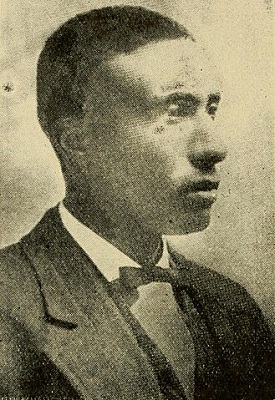
William Madison McDonald

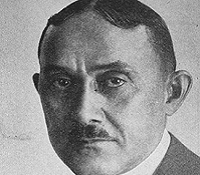


June 22 …
William Madison McDonald — widely known as “Goose Neck Bill” — was born on June 22, 1866 in Kaufman County, TX to parents who had been enslaved prior to the end of the American Civil War.
Raised during Reconstruction, he pursued education through local common schools before attending Roger Williams University (Tennessee) in Nashville, an institution founded by the American Baptist Home Mission Society. He later continued his studies at Bishop College and Prairie View Normal School, receiving training that prepared him for a career in education and leadership.
McDonald began his professional career as a teacher in Texas’s segregated school system, first working in rural schools in Kaufman County. He later became principal of a school in Forney and subsequently served as principal in Terrell, where he was recognized for strengthening academic instruction and expanding access to education for African American students. During this period, he also married Nannie (or Nanny) McDonald, and the couple established a family while he was building his early career. Historical records indicate that they had children, though details about them are limited in surviving sources.
Alongside his work in education, McDonald became deeply involved in African American fraternal organizations, which were central to community advancement in the late 19th and early 20th centuries. He held leadership roles in Prince Hall Freemasonry and was also a prominent member of the Grand United Order of Odd Fellows, as well as the Knights of Pythias (African American). Through these organizations, he helped promote mutual aid, insurance programs, and economic cooperation, building networks that would later support his business ventures.
In 1906, McDonald co-founded the Fraternal Bank and Trust Company in Fort Worth, one of the most important African American financial institutions in Texas. Drawing on his fraternal connections, he expanded into banking, real estate, and insurance, accumulating substantial wealth and becoming one of the most prominent Black businessmen in the state. He also emerged as a powerful political figure within the Republican Party during the Jim Crow era, using his influence to secure patronage positions and advocate for African American participation in public life.
William Madison McDonald died on July 5, 1950, leaving a legacy as an educator, fraternal leader, businessman, and political strategist. His life reflects the ways African American leaders combined education, family life, mutual aid networks, and economic enterprise to build resilience and influence in a segregated society.
Footnotes:
- Texas State Historical Association, “William Madison McDonald,” Handbook of Texas Online.
- BlackPast.org, “William Madison McDonald (1866–1950).”
- Juliet E.K. Walker, The History of Black Business in America, University of North Carolina Press.
- Loren Schweninger, Black Property Owners in the South, 1790–1915, University of Illinois Press.
- Records on African American fraternal organizations, including Prince Hall Masons, Grand United Order of Odd Fellows, and Knights of Pythias.
