
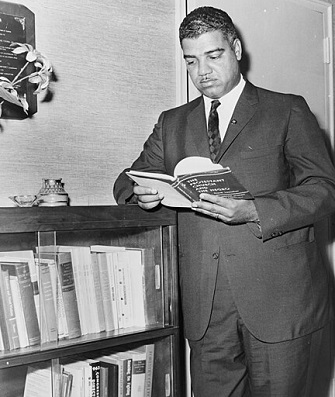
Whitney Young


July 31 …
Whitney Young was a pivotal American civil rights leader whose pragmatic vision and institutional strategy helped reshape the relationship between racial justice, government policy, and corporate America during the mid-twentieth century.
Born on July 31, 1921 in Shelby County, KY to educator and racial reformer parents, Young developed a strong moral compass and an early awareness of the promise of education alongside the harsh realities of segregation — experiences that would significantly shape his leadership approach.
Young gained national recognition as the executive director of the National Urban League, transforming it from a modest social service organization into a powerful advocate for civil rights and economic justice. Under his leadership, the Urban League saw substantial growth in size, budget, and influence, focusing on employment, housing, education, and job training for Black Americans in urban areas.
Unlike many of his contemporaries, Young prioritized collaboration with government and private sectors, believing that addressing systemic inequality required structural solutions embedded in public policy and economic opportunity.
Young’s influence deeply penetrated American governance, particularly during the administrations of Presidents John Kennedy and Lyndon Johnson. He served as a trusted advisor on civil rights legislation and social programs, significantly impacting initiatives like the War on Poverty and advocating for the inclusion of African Americans in federally funded employment and training programs. His strategy successfully translated moral urgency into actionable policies, bridging grassroots activism with institutional reform.
Intellectually and morally, Young was profoundly influenced by his father, Young Sr., who taught him that education leads to personal dignity and social change. He was further shaped by mentors in social work and academia who advocated for data-driven solutions and community empowerment.
He drew inspiration from earlier Black leaders who integrated reform with institution-building, while contemporaries like Martin Luther King Jr., Roy Wilkins, and A. Philip Randolph also shaped his perspectives. Although some criticized him for being too moderate, Young effectively navigated power structures that others often challenged from outside.
Culturally, Young redefined Black leadership in America by exemplifying a form of activism rooted in professionalism, negotiation, and economic inclusion. He urged corporations to diversify their workforces and promoted greater representation of African Americans in management and leadership roles, helping to normalize discussions about racial equity in boardrooms and government offices. His articulate and assertive public presence challenged stereotypes and broadened the cultural understanding of civil rights leadership.
Young’s impact was acknowledged through numerous accolades, including the Presidential Medal of Freedom, awarded posthumously for his national service and enduring influence. His untimely death in 1971 truncated a flourishing career, yet his legacy lives on through the institutions he strengthened, the policies he influenced, and the pragmatic yet ethical framework he provided for advancing civil rights.
Whitney Young remains a pivotal figure in American history, symbolizing a moment when social justice, governance, and economic reform converged to advance the nation toward greater equality.
