
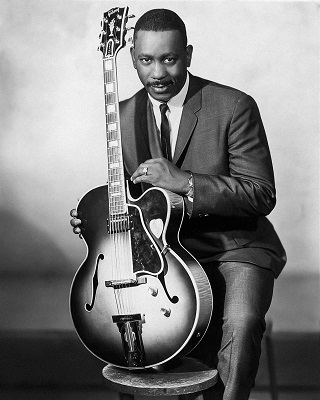
Wes Montgomery

March 6 …
Wes Montgomery was one of the most influential jazz guitarists in history, whose innovative technique and melodic sensibility reshaped the role of the guitar in modern music.
He was born John Leslie Montgomery on March 6, 1923, in Indianapolis, where he spent most of his life and developed his musical identity. Largely self-taught, Montgomery did not undergo extensive formal musical training. Instead, he honed his skills by closely listening to recordings, especially those of Charlie Christian, whose groundbreaking electric guitar work deeply influenced him.
Montgomery began his guitar journey in his late teens, juggling his musical aspirations with factory work to support his family, often practicing late into the night. This dedication led him to develop a distinctive style, favoring his thumb over a pick, which produced a warm, rounded tone that became his hallmark. In a nurturing artistic environment, Montgomery was supported by his brothers, Buddy and Monk, who were also musicians.
Montgomery gained prominence in the late 1950s after being discovered by Cannonball Adderley, which opened the door for recordings with Riverside Records. His albums, including The Incredible Jazz Guitar of Wes Montgomery, solidified his status as a central figure in jazz. He became renowned for his innovative use of octaves and chord melodies, techniques that broadened the expressive possibilities of the guitar.
Throughout his career, Montgomery collaborated with notable contemporaries such as Miles Davis, John Coltrane, and Herbie Hancock, contributing to a dynamic era of musical innovation. His collaborations and exposure to leading jazz musicians helped refine his artistry and expand his influence.
In addition to his technical innovations, Montgomery played a pivotal role in popularizing jazz during the 1960s by integrating elements of pop and orchestration into his works. His later recordings, often characterized by lush arrangements, helped unite jazz purists and mainstream audiences, broadening the genre’s commercial appeal.
Montgomery’s influence reached across generations of guitarists in jazz, rock, and R&B, inspiring artists who embraced his thumb technique and harmonic style. While he did not create a formal lineage of protégés, his impact resonates in the playing of countless musicians who came after him, establishing him as a foundational figure in modern guitar performance and a cultural ambassador for jazz music.
Montgomery garnered considerable recognition for his contributions, including multiple Grammy Awards for albums such as Goin’ Out of My Head and Bumpin’. His work achieved a rare combination of both critical acclaim and commercial success in jazz.
Though his life was tragically cut short when he died on June 15, 1968, his legacy lives on through his recordings and lasting influence on music worldwide. The artistry of Wes Montgomery not only transformed jazz guitar but also enriched the tapestry of American cultural history, illustrating the expressive power and universal appeal of instrumental music.
