
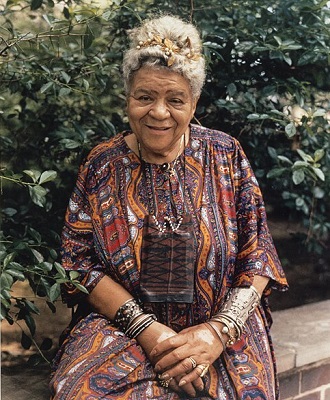
Queen Mother Moore


July 27 …
Queen Mother Moore was a formidable Black nationalist, Pan-Africanist, and reparations advocate whose activism spanned much of the 20th century and linked the struggles of African Americans to global movements for liberation.
Born Audley Moore on July 27, 1898 in New Iberia, LA, Moore grew up amidst the fallout of Reconstruction’s collapse and the tightening grip of Jim Crow segregation. Orphaned at a young age and largely self-taught, Moore cultivated her political awareness through lived experiences rather than formal education.
Moore eventually settled in Harlem, where the dynamic atmosphere of the Harlem Renaissance and the Great Migration introduced her to radical politics, labor organizing, and Pan-African thought that would greatly influence her life’s work.
In the 1920s and 1930s, Moore engaged with the Universal Negro Improvement Association, inspired by the teachings of Marcus Garvey, whom she viewed as a significant ideological mentor and hero. Garvey’s focus on Black pride, economic self-sufficiency, and global unity among Africans deeply resonated with her activism.
During the Great Depression, Moore also immersed herself in socialist and communist circles, recognizing the interconnectedness of class struggle and racial justice. Over time, however, she carved out her own unwavering path, prioritizing the demand for reparations for descendants of enslaved Africans long before it became a mainstream political issue. She established and led organizations committed to compensation, self-determination, and the acknowledgment of African Americans as a people deserving of international human rights protections.
Throughout the mid-20th century, Moore collaborated with and occasionally found herself at odds with notable figures such as Malcolm X and Adam Clayton Powell Jr., championing a more explicitly nationalist and reparations-focused agenda. She admired the expansive vision of leaders who confronted colonialism and racial inequality, mentoring younger activists in Harlem who sought a deeper historical understanding of slavery, land dispossession, and economic exploitation.
After meeting Mary McLeod Bethune in Washington, Moore became a life member of the National Council of Negro Women. It was with Bethune that Moore would make the first of many speeches to crowds of those interested in the fight for civil rights.
Moore played a crucial role in advancing petitions to the United Nations that accused the United States of genocide against African Americans, linking domestic racial injustice to international law. Her speeches — fiery, well-researched, and morally compelling — helped sustain a radical Black political tradition during times when integrationist approaches dominated public discourse.
Moore’s activism was not without its challenges. She operated with limited financial resources, faced government surveillance, and often encountered skepticism within Black political circles regarding the practicality of reparations. Nonetheless, she persevered for decades, organizing conventions, publishing pamphlets, and forging coalitions that kept the demand for reparations alive.
Her Harlem apartment became a center for grassroots political education, where community members gathered to discuss African history, self-governance, and strategies for economic independence. She championed cultural pride, urging African Americans to reclaim their heritage through names, attire, and historical study, anticipating future movements that emphasized Afrocentric identity and Pan-African solidarity.
In recognition of her tireless efforts, Moore was honored in her later years with the title “Queen Mother,” a designation that reflected both respect and her self-image as a custodian of her people’s historical legacy. Community organizations celebrated her as a living bridge between Garveyism and contemporary Black liberation struggles, and she received civic accolades acknowledging her decades of advocacy.
When Queen Mother Moore passed away in 1997, she left behind a legacy intricately tied to the ongoing fight for reparative justice and global African unity.
Queen Mother Moore’s life exemplifies the power of sustained grassroots activism, intellectual independence, and the enduring demand for the United States to confront the full moral and material repercussions of slavery and racial oppression.