
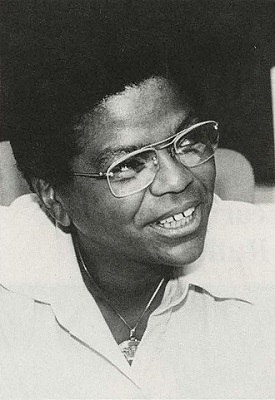
Mary Frances Berry


February 17 …
Mary Frances Berry is a distinguished historian, lawyer, professor, and public servant whose scholarship and civic leadership have shaped debates about race, gender, constitutional law, and civil rights in the United States.
Born February 17, 1938 in Nashville, TN, Berry rose from a childhood marked by poverty and segregation to achieve remarkable academic success. She attended Fisk University in Nashville, then transferred to Howard University, where she earned a B.A. and M.A. In 1966, she received a Ph.D. in American constitutional history from the University of Michigan, and a J.D. from the University of Michigan Law School in 1970.
Berry made history as the first African American chancellor of a major research university at the University of Colorado and served as provost at the University of Maryland. Since 1988, she has held the position of Geraldine R. Segal Professor of American Social Thought at the University of Pennsylvania.
Berry’s influence extends across academia and public service. Her foundational works, including Black Resistance/White Law, My Face Is Black Is True, and History Teaches Us to Resist, have transformed perspectives on constitutional racism, reparations, and social movements.
Berry dedicated decades to the U.S. Commission on Civil Rights, serving as chair from 1993 to 2004 and producing critical reports on policing, voting rights, Native American issues, and civil rights enforcement. Additionally, she held significant roles within the Department of Health, Education, and Welfare.
Throughout her career, Berry has been shaped by influential mentors and colleagues in the fields of legal history and civil rights. This includes faculty from Howard and Michigan who supported her early scholarship, as well as public servants who facilitated her rise.
Berry’s contemporaries include notable figures like John Hope Franklin and Barbara Ransby, with whom she has shared professional ties. She has also dedicated herself to mentoring countless students and emerging scholars, many of whom remain well-known within academic circles.
Berry’s extensive contributions have been recognized with numerous accolades, such as the NAACP’s Roy Wilkins Award and Image Award, the Southern Christian Leadership Conference’s Rosa Parks Award, and the Hubert H. Humphrey Civil Rights Award. She and is also a fellow of the Society of American Historians and the National Academy of Public Administration.
Berry received the Organization of American Historians’ Roy Rosenzweig Distinguished Service Award in 2014. she has also received many honorary doctorates and international commendations for her scholarship and activism.
Through her roles as a scholar, public official, and advocate, Mary Frances Berry has left a lasting impact on American academia, law, public policy, and the narrative of civil rights history.
