
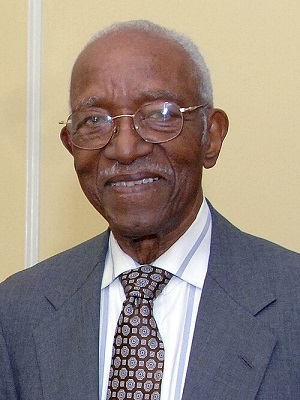
John Hope Franklin


January 2 …
John Hope Franklin was one of the most influential American historians of the 20th century, whose scholarship profoundly reshaped understanding of United States history by centering African Americans at the heart of the nation’s narrative and advancing education, social justice, and cultural awareness.
Over a distinguished career spanning more than six decades, Franklin brought rigorous research, moral clarity, and eloquent interpretation to the study of slavery, Reconstruction, civil rights, and race relations. His contributions established a more honest and inclusive representation of American history in classrooms, courts, and public discourse.
Born on January 2, 1915 in the town of Rentiesville in Oklahoma, Franklin was the son of parents who valued education and community engagement — his father was Buck Colbert Franklin. The younger Franklin was nurtured in an environment shaped by Black self-determination and cultural pride. He earned his undergraduate degree from the University of Tulsa before pursuing graduate studies at Harvard University, where he completed both his master’s and doctoral degrees in history.
At Harvard, Franklin studied under esteemed historians and absorbed the methodological rigor that would later support his groundbreaking interpretations of the American past. His early academic influences included historians like Charles H. Haskins, and he was inspired by figures such as W.E.B. Du Bois, whose commitment to rigorous scholarship and Black intellectual agency shaped Franklin’s sense of purpose and scholarly duty.
Franklin’s first major academic appointments included faculty positions at Fisk University and Howard University, where he taught and mentored generations of young scholars during and after World War II.
In 1947, he published From Slavery to Freedom, a sweeping narrative that became one of the most widely used textbooks on African American history, solidifying his reputation as a seminal voice in the field. His approach combined meticulous archival research with a compelling moral vision, showcasing how African Americans were central actors in the formation of the United States.
During the Civil Rights Movement, Franklin’s scholarship provided historical grounding for legal and political challenges to segregation. He also served as a key consultant on the Supreme Court case, Brown v. Board of Education, helping to frame arguments that ultimately dismantled the doctrine of “separate but equal” schooling.
Throughout his career, Franklin engaged with many leading intellectuals and activists of his time. He was a contemporary of fellow historians such as C. Vann Woodward and Eric Foner, and he maintained friendships with civil rights leaders like Thurgood Marshall.
His mentorship extended to numerous protégés and colleagues who went on to shape American historiography, moving the field toward more inclusive approaches. His commitment to education was evident in his leadership roles at institutions including Brooklyn College and the University of Chicago, where he influenced both undergraduate and graduate training in history.
Franklin’s accomplishments were recognized with numerous awards and honors, including the Presidential Medal of Freedom — the nation’s highest civilian award — reflecting his impact not just in academia, but across American culture and public life. He also received the National Humanities Medal, multiple honorary degrees, and held leadership positions in various professional organizations.
Beyond formal accolades, his legacy endures in the countless students he taught, the scholars he inspired, and the transformative way Americans think about their past. Through his scholarship, teaching, and public engagement, John Hope Franklin broadened the nation’s understanding of itself and reinforced the pursuit of justice, equality, and historical truth.