


January 9 …
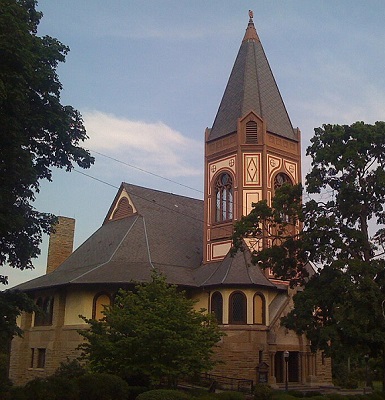
Fisk University — founded on January 9, 1866 — is a private, Historically Black University located in Nashville, TN.
With assistance from the Freedmen’s Bureau, the American Missionary Association established the institution in the wake of the Civil War to educate the newly freed people. Named for Union General Clinton B. Fisk, the school began in former Union Army barracks with a small but determined student body seeking literacy and advancement.
Under its first president, Erastus Milo Cravath, Fisk developed from a basic normal school into an institution offering a classical liberal arts curriculum that included Latin, Greek, mathematics, philosophy, and theology.
Financial hardship threatened the school in its early years until the creation of the Fisk Jubilee Singers in 1871, led by George L. White. Their national and international tours raised essential funds, which financed the construction of Jubilee Hall in 1876 and secured the university’s future.
Fisk grew into a leading center of Black intellectual and cultural life in the late 19th and 20th centuries. Distinguished among its early faculty was W.E.B. Du Bois — who taught at Fisk from 1934 to 1944 — and strengthened its programs in sociology and history.
A later faculty member of renown was John Hope Franklin, one of the most influential American historians of the 20th century. Franklin served on the Fisk faculty from 1947 to 1956 as a professor of history and later as chairman of the history department. During his tenure, he helped elevate the department’s academic rigor and advanced the study of African American history at a critical moment in its development. His time at Fisk coincided with the publication and growing influence of his landmark work, From Slavery to Freedom (1947), which became a foundational text in the field.
The university’s alumni have had a lasting impact on American society. They include the following individuals.
- W.E.B. Du Bois, himself a graduate of Fisk (1888), went on to become a pioneering sociologist and civil rights leader.
- Ida B. Wells attended Fisk in the early 1880s and became a fearless anti-lynching crusader.
- John Lewis (1967) emerged from his training at Fisk as a key leader in the Civil Rights Movement and a longtime member of Congress.
- Nikki Giovanni (1967) became one of the most prominent poets in modern African American literature.
Fisk University remains a vital institution in higher education, preserving a legacy rooted in academic excellence, cultural achievement, and the advancement of African American intellectual life.
Footnotes:
- Fisk University. History of Fisk University. Nashville, TN: Fisk University. Accessed April 2026.
- Encyclopaedia Britannica. “Fisk University.” Britannica Online Encyclopedia. Accessed April 2026.
- American Missionary Association. “Annual Reports, 1866–1875.” New York: AMA Publications.
- U.S. Bureau of Refugees, Freedmen, and Abandoned Lands (Freedmen’s Bureau). “Records of the Education Division, Tennessee, 1865–1872.” National Archives.
- Ward, Andrew. Dark Midnight When I Rise: The Story of the Fisk Jubilee Singers. New York: Farrar, Straus and Giroux, 2000.
- Franklin, John Hope. From Slavery to Freedom: A History of African Americans. New York: Alfred A. Knopf, 1947.
- Du Bois, W.E.B. Dusk of Dawn: An Essay Toward an Autobiography of a Race Concept. New York: Harcourt, Brace and Company, 1940.