
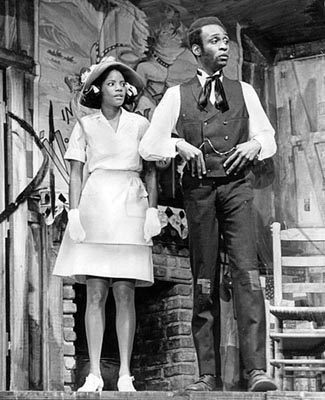
Cleavon Little


June 1
Cleavon Little, was a trailblazing actor whose performances on stage and screen helped redefine the portrayal of African Americans in American entertainment.
Born on June 1, 1939, in Chickasha, OK and raised in California, Little initially studied music before discovering his passion for acting, ultimately graduating from San Diego State University and later earning a scholarship to Juilliard. His training and talent quickly propelled him into the spotlight, where he would become known for his versatility, charm, and fearless approach to challenging roles.
Little’s breakout role came on Broadway in 1970 when he won a Tony Award for Best Actor in a Musical for Purlie, a satirical show that blended gospel music, comedy, and a powerful critique of racial injustice in the American South. His portrayal of the charismatic preacher Purlie Victorious was a bold and joyous performance that broke new ground for Black actors on Broadway. It established Little as a dynamic stage presence and affirmed that Black performers could lead commercially successful and socially meaningful productions.
While he continued to shine on stage, it was Little’s performance as Sheriff Bart in Mel Brooks’ 1974 comedy Blazing Saddles that made him a household name. As the first Black sheriff of a racist frontier town, Little brought intelligence, humor, and cool charisma to a role that subverted stereotypes and lampooned bigotry. The film, a biting satire of racism wrapped in slapstick comedy, became a cultural touchstone, and Little’s performance stood out as both hilarious and heroic. His ability to balance wit with dignity helped challenge Hollywood’s limited view of Black characters.
Throughout the 1970s and 1980s, Cleavon Little worked steadily in both film and television, appearing in projects such as Vanishing Point, FM, and the sitcom Temperatures Rising. He frequently chose roles that pushed back against one-dimensional portrayals of African Americans, bringing nuance and depth to his characters. Though he often operated within a system that limited opportunities for actors of color, Little consistently found ways to elevate the material and use his roles to reflect broader social commentary.
In addition to his acting, Little was an advocate for better representation of Black artists in Hollywood. His career helped open doors for future generations of performers by proving that a Black actor could successfully carry both comedic and dramatic roles with broad appeal. He brought a sense of style and confidence to his performances that challenged the industry’s norms and expanded the landscape of American film and television.
Cleavon Little passed away in 1992 at the age of 53, but his contributions continue to resonate. He was more than a talented actor — he was a cultural pioneer who used humor, intelligence, and heart to challenge racial stereotypes and carve out space for Black talent in mainstream entertainment. His legacy lives on in the generations of actors who followed in his footsteps, as well as in the continued relevance of his most iconic roles. Cleavon Little remains a symbol of courage, creativity, and excellence in American stage and screen history.
* Photo of Cleavon Little and Melba Moore from the Broadway musical “Purlie” taken in 1970. (Zodiac Photographers, New York)
