
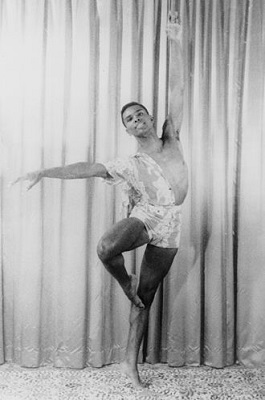
Arthur Mitchell

March 27
The story of Arthur Mitchell — ballet dancer, choreographer, and founder and director of ballet companies — is one of remarkable resilience, talent, and transformative impact on American dance and culture.
Born in Harlem on March 27, 1934, Mitchell grew up facing economic hardships and racial barriers, yet he broke through into the world of ballet thanks to the encouragement of a school guidance counselor and a scholarship to the High School of Performing Arts in New York. There, he was inspired by teachers and choreographers who introduced him to the discipline and expressive possibilities of classical dance, paving the way for a career that would challenge and transform the ballet world. His early exposure to modern dance, notably through figures like Donald McKayle, coupled with formal training at the School of American Ballet, fostered his versatility and artistic vision, merging tradition with innovation.
In 1955, Mitchell shattered one of the most significant color barriers in American ballet when he joined the New York City Ballet, becoming the first African American member of a major ballet company. His talent and dedication swiftly led him to the role of principal dancer, where he brought remarkable presence and technical skill to a diverse range of choreography.
The legendary choreographer George Balanchine, a central figure in the company’s repertoire, created specific roles for Mitchell, including the crucial pas de deux in “Agon” and the character of Puck in A Midsummer Night’s Dream. These performances not only highlighted Mitchell’s artistry but also represented a quiet revolution in an art form that had long resisted racial integration.
Mitchell’s mentors included Balanchine, whose neoclassical vision widened his understanding of ballet’s expressive potential, and Karel Shook, a former instructor who later became his partner in establishing the Dance Theatre of Harlem. The influence of these individuals and the broader creative community around him helped Mitchell perceive dance as not only a performance but also a means of cultural expression and social change, shaped by his own experiences with prejudice and the examples of other groundbreaking artists who redefined American cultural spaces.
In the late 1960s, moved by the assassination of Dr. Martin Luther King Jr. and acutely aware of the restricted opportunities for Black youth, Mitchell shifted his focus from personal success to collective empowerment. With Shook’s collaboration and support from patrons and foundations, he established a dance school in Harlem that would later evolve into the Dance Theatre of Harlem in 1969.
Beginning with just a few dozen students in a church basement, the program quickly grew, offering rigorous classical training to hundreds of young people who would otherwise have been excluded from the ballet world. The company’s official debut at the Guggenheim Museum in 1971 heralded the emergence of a powerful new force in American dance — one that combined technical excellence with a celebration of cultural identity.
Under Arthur Mitchell’s artistic vision, the Dance Theatre of Harlem garnered international acclaim for its innovative repertoire and its efforts to make classical ballet accessible to broader and more diverse audiences. The company’s performances integrated works by Balanchine and other masters with pieces that reflected American narratives and African American cultural themes, including the renowned Creole Giselle. Through tours, outreach initiatives, and educational programs like Dancing Through Barriers, Mitchell worked tirelessly to ensure that ballet remained inclusive and relevant, dismantling deeply rooted racial barriers in the performing arts.
Mitchell’s contributions earned him numerous accolades, recognizing both his artistic excellence and cultural leadership. These honors included a Kennedy Center Honor, the National Medal of Arts, a MacArthur Fellowship, the Heinz Award in the Arts and Humanities, the Bessie Lifetime Achievement Award, and induction into the National Museum of Dance’s Hall of Fame, alongside more than a dozen honorary degrees. These recognitions reflected not only his personal accomplishments as a dancer and choreographer but also his visionary role in redefining American cultural life and broadening opportunities for future generations of dancers.
The legacy of Arthur Mitchell lives on in the dancers he inspired, the institutions he founded, and the cultural perspectives he shifted. By advocating for ballet’s accessibility and demonstrating that artistic excellence transcends race, he helped redefine the landscape of American dance. His work not only enriched the cultural fabric of the United States but also showcased how art can serve as a powerful catalyst for social change.
Even after his passing in 2018, Arthur Mitchell’s influence persists through the ongoing endeavors of the Dance Theatre of Harlem, the preservation of his creative journey in archives, and the countless artists who continue to follow in his footsteps.
