

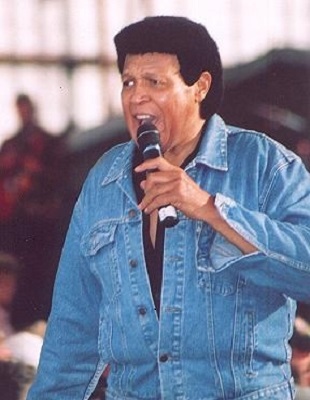
Chubby Checker
October 3 …
Chubby Checker was a music icon whose influence reached far beyond the soundscape of his era.
Born Ernest Evans on October 3, 1941 in Spring Gully, SC and raised in South Philadelphia, from an early age he displayed a talent for mimicry and music, entertaining classmates and customers at the poultry market where he worked. His nickname “Chubby” was coined during a playful exchange with a coworker, and when he performed a Fats Domino impression during a recording session, a studio executive jokingly added “Checker,” completing the stage name that would soon be known around the world.
Checker’s career took off in 1960 with his rendition of “The Twist,” a song originally recorded by Hank Ballard. Chubby’s energetic interpretation and television appearances — especially on American Bandstand — sparked a cultural phenomenon.
“The Twist” soared to number one on the Billboard Hot 100 not once, but twice — in 1960 and again in 1962 — making it the only song in American chart history to achieve that feat. More than a hit, it launched a dance craze that swept across age, race, and class lines, transforming how Americans interacted with music and with one another.
The impact of “The Twist” went beyond music charts. It was revolutionary in the way it encouraged individual, improvisational dancing, a break from the partner-based dances of the 1950s. The song helped usher in a more expressive era of dance and personal freedom, reflecting the shifting cultural landscape of the early 1960s. At a time when the country was beginning to confront civil rights issues and challenge social norms, it served as both soundtrack and symbol of youthful rebellion and cultural transformation.
Checker followed the success of “The Twist” with a series of popular dance-themed hits such as “Let’s Twist Again,” “Pony Time,” and “The Fly.” While these songs cemented his association with the dance craze era, they also typecast him in a narrow musical niche, limiting his later commercial success. Nevertheless, his contributions helped define the early rock and roll movement, and his influence can be seen in how dance became central to pop music culture, paving the way for future artists who would similarly link their music to physical expression and trendsetting.
Throughout his career, Checker remained vocal about his legacy, often reminding audiences and the music industry of his pivotal role in changing the entertainment landscape. He challenged the way fame was granted and remembered, pointing out the paradox that one of the most culturally transformative figures in American music history was often excluded from critical conversations. His persistence in defending his contributions highlighted deeper issues about recognition, race, and the fleeting nature of fame in popular culture.
Today, Checker’s role in American music and cultural history is undisputed. He helped ignite the dance revolution of the 1960s, reshaped youth culture, and made rock and roll more participatory and inclusive. While he may be most associated with a single song, the broader significance of his work lies in how it connected people through movement and joy during a transformative period in American life.
The legacy of Chubby Checker endures in every dance floor that welcomes freedom of expression and in every artist who understands that music can move both the body and the spirit.
