

May 18 …
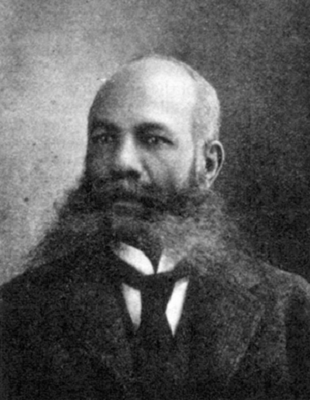
Alexander Miles was an inventor and entrepreneur, recognized for receiving a patent for his innovative system for automatically opening and closing elevator doors.
Miles was born on May 18, 1838 in Pickaway County, OH during a time of profound racial inequality and limited opportunities for African Americans. Though historical records provide few details about his early years, it is clear that he grew up in a society where Black Americans faced systemic discrimination in nearly every aspect of life. Despite these challenges, Miles would go on to make a lasting mark on American innovation, using his creativity and determination to overcome the limitations imposed by the era in which he lived.
Miles eventually moved to Duluth, MN, where he built a life as both an entrepreneur and an inventor. He opened a successful barbershop and invested in real estate, becoming one of the few African Americans in the region to achieve economic success during the post-Civil War period. His ability to thrive in business despite widespread racial barriers is a testament to his ambition and resourcefulness. But it was his keen sense of observation and problem-solving that would lead him to his most enduring contribution to technology.
During the 19th century, elevators were becoming more common in public buildings, but they remained dangerous. Passengers often had to manually open and close both the elevator and shaft doors, leading to frequent and sometimes fatal accidents. Miles, concerned for the safety of others — especially after a frightening incident involving his young daughter — recognized the need for a more reliable, automated system. His concern for public welfare motivated him to innovate where others had not yet found a solution.
In 1887, Miles patented a mechanism that automated the opening and closing of elevator doors in coordination with the elevator’s movement. This invention greatly reduced the risk of people falling into open shafts, a common hazard at the time. His design used a flexible belt attached to the elevator that triggered the shaft doors to open and close as the elevator arrived and departed. This breakthrough improved elevator safety and laid the groundwork for the automatic door systems still in use today.
Miles’s invention came at a critical time in American history, as urban centers were expanding and multi-story buildings were becoming increasingly common. Safe and reliable elevators were essential for this growth, and his work helped make tall buildings more practical and accessible. Though not widely recognized during his lifetime, his contribution to the evolution of vertical transportation helped shape the infrastructure of modern cities and contributed to the safety standards we now take for granted.
Beyond his technical achievements, Miles holds an important place in American cultural history. As a Black inventor who secured a U.S. patent during a time when African Americans faced numerous legal and social obstacles, he broke through barriers that excluded many others. His success challenged the prevailing assumptions about race and intellectual ability, offering a powerful example of Black excellence in innovation. He has since become a symbol of resilience and creativity in the face of adversity.
Miles died in 1918, but his legacy endures in the technology that protects elevator passengers every day and in the broader story of African American contributions to science and industry. His life is a reminder that innovation is not bound by circumstance, and that even in an era of deep injustice, individuals like Miles found ways to shape the future.
The story of Alexander Miles enriches the tapestry of American history and continues to inspire future generations to pursue progress through ingenuity and determination.