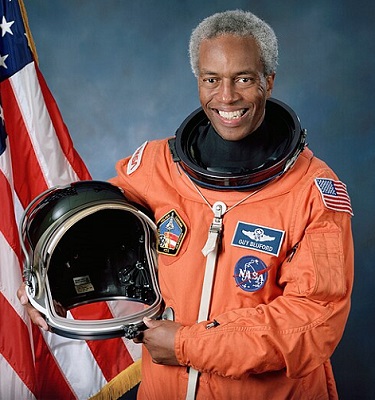
Guion Bluford
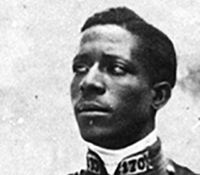
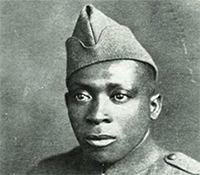


November 22 …
Guion Bluford is a pioneering aerospace engineer, retired United States Air Force colonel, and former NASA astronaut who is the first African American to travel into space.
Listen to his story:
Born Guion Stewart Bluford Jr. on November 22, 1942 in Philadelphia, Bluford grew up in a family that valued education and professional achievement. His father was a mechanical engineer, and his mother was a special education teacher. His parents and grandparents were college educated, encouraging him to pursue academic excellence.
Bluford’s interest in aviation and aerospace engineering developed early, and he attended Overbrook Senior High School, graduating in 1960. He subsequently enrolled at Pennsylvania State University, where he participated in the Air Force Reserve Officers’ Training Corps (ROTC) program and earned a Bachelor of Science degree in aerospace engineering in 1964. He continued his education at the Air Force Institute of Technology, receiving a Master of Science degree with distinction in aerospace engineering in 1974 and a Doctor of Philosophy in aerospace engineering, with a minor in laser physics, in 1978. He later earned a Master of Business Administration from the University of Houston–Clear Lake in 1987.
After graduating from Penn State, Bluford entered active duty with the U.S. Air Force, where he received his pilot wings in 1966 and completed fighter-pilot training. During the Vietnam War, he flew 144 combat missions in the F-4C Phantom II, gaining extensive experience in aviation, flight operations, and military technology. He later served as a T-38 instructor pilot, training other military pilots and accumulating thousands of hours of flight experience.
Bluford subsequently worked at the Air Force Flight Dynamics Laboratory at Wright-Patterson Air Force Base in Ohio, where his responsibilities included research and development involving aerodynamics, aircraft performance, and advanced aerospace concepts. His technical expertise, military accomplishments, and advanced engineering education helped prepare him for NASA’s astronaut program.
In January 1978, NASA selected Bluford as one of 35 astronaut candidates from approximately 10,000 applicants. He completed astronaut training in 1979 and qualified as a mission specialist. His contemporaries helped establish a more diverse generation of American space explorers. They include fellow pioneering astronauts:
- Sally Ride, America’s first woman in space;
- Ronald McNair, another African American astronaut who later flew aboard Challenger;
- Frederick D. Gregory, an African American astronaut and future NASA administrator; and
- Charles F. Bolden Jr., who later became NASA administrator.
Bluford’s historic achievement began with his first spaceflight aboard the Space Shuttle Challenger on STS-8, launched on August 30, 1983, which made him the first African American in space. During the mission, he helped deploy India’s INSAT-1B communications satellite, operate the shuttle’s robotic arm, and conduct biomedical and scientific experiments examining the effects of spaceflight on living organisms.
Bluford subsequently completed three additional missions: STS-61A in 1985, STS-39 in 1991, and STS-53 in 1992. By the conclusion of his astronaut career, he had accumulated more than 688 hours in space.
Bluford’s accomplishments earned him numerous honors, including the U.S. Air Force Command Pilot Astronaut Wings, NASA Space Flight Medals, Ebony Black Achievement Award, NAACP Image Award, Pennsylvania Distinguished Service Medal, Defense Superior Service Medal, 1991 Black Engineer of the Year Award, NASA Exceptional Service Medal, Legion of Merit, and NASA Distinguished Service Medal. He was inducted into the International Space Hall of Fame in 1997, U.S. Astronaut Hall of Fame in 2010, and National Aviation Hall of Fame in 2019. He also received the Pennsylvania Society Gold Medal in 2011 and numerous honorary doctoral degrees.
Following his retirement from NASA and the Air Force in 1993, Bluford continued contributing to American aerospace engineering, scientific research, and technological development through leadership positions in private industry, where he served as vice president and/or general manager. In 2002, he became president of the Aerospace Technology Group, an engineering consulting organization.
Bluford’s influence on American society extends beyond his scientific and engineering accomplishments. By breaking a significant racial barrier in human spaceflight, he helped challenge historical assumptions about who could become an astronaut and encouraged greater participation by African Americans and other underrepresented groups in science, technology, engineering, and mathematics.
The example set by Guion Bluford has served as an inspiration and source of encouragement for aspiring scientists, engineers, military aviators, and astronauts.
Selected Sources:
- NASA. “Guion S. Bluford Jr. Official Biographical Data” (May 2019).
- U.S. Air Force. “First African-American Astronaut Refused to Let ‘Misstep’ Keep Him from Dream.”
- Smithsonian National Air and Space Museum. “1983: First African American in Space.”
- National Aviation Hall of Fame. “Guion ‘Guy’ S. Bluford Jr.”
- New Mexico Museum of Space History. “Guion S. Bluford Jr.”