
March 6 …
Virginia State University (VSU), a public historically Black land-grant university in Ettrick near Petersburg, was chartered on March 6, 1882, as the Virginia Normal and Collegiate Institute. Alfred W. Harris, a Black lawyer and Dinwiddie County delegate, sponsored the bill.
Listen to this story:
Established after Reconstruction, the school offered African Americans a path to higher education largely unavailable elsewhere in Virginia. It opened in October 1883 with 126 students, seven Black faculty members, 33 acres, one building, a 200-volume library, and a $20,000 budget.
VSU describes itself as the nation’s first fully state-supported four-year institution of higher education for African Americans.
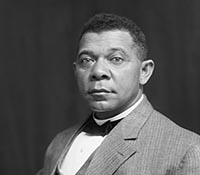
John Mercer Langston, an abolitionist, lawyer, educator, and diplomat, shaped its early years. Appointed president on November 19, 1885, he had served as the founding dean of the law school at Howard University and as U.S. minister to Haiti. He broadened the curriculum, added six professorships, and saw enrollment rise to about 150 in his first year and nearly 200 in his second. He resigned in 1887 amid political shifts in Virginia. After successfully contesting the 1888 election, he became the first African American from Virginia elected to Congress.
The school’s mission and name evolved together. In 1902, it became the Virginia Normal and Industrial Institute, and in 1920 it assumed Virginia’s Black land-grant program from Hampton Institute. Its college program was restored in 1923, and it became Virginia State College for Negroes in 1930, Virginia State College in 1946, and Virginia State University in 1979.
Leadership at the institution was stable. James H. Johnston and John M. Gandy served more than 50 years combined, and Eddie N. Moore Jr. served 17 years (1993–2010). Pamela V. Hammond, interim president in 2015–2016, was the first woman to lead the university, and Makola M. Abdullah became the 14th president in 2016.
Enrollment has grown alongside the institution. From 126 students in 1883–84, the student body approached 5,000 by the 1982 centennial, when VSU had about 250 full-time faculty, more than 50 buildings, a 236-acre main campus, and a 416-acre research farm. After decades of fluctuation, enrollment surged again, reaching 4,649 in Fall 2022 and 5,190 in Fall 2023, when a record 1,443 first-year students enrolled. By Fall 2025, enrollment reached 5,754, with 5,202 undergraduates and 552 graduate students.
Alumni of Virginia State reflect the university’s reach.
- Physicist Herman Branson (1936) studied protein structure.
- Soprano Camilla Williams (1941) broke racial barriers in American opera.
- Mathematician Gladys West (B.S. 1952 and M.S. 1955) conducted geodetic modeling that contributed to the technology behind GPS.
- Regenia A. Perry (B.A. 1961) was a pioneering curator and scholar of African American art and the first Black woman in the U.S. to earn a doctorate in art history.
- Reginald F. Lewis (1965) built TLC Beatrice International into a billion-dollar company, and VSU’s business college now bears his name.
- Lucy McBath (B.A. 1982) became a gun-violence-prevention advocate after her son, Jordan Davis, was killed in 2012, and she was elected to Congress from Georgia in 2018.
Today, Virginia State University is one of Virginia’s two land-grant universities. Its growth from 126 students to a university of roughly 5,700 mirrors the expansion of educational opportunity for African Americans. Its graduates have shaped education, science, agriculture, business, government, and the arts, carrying forward the mission established in 1882.
Selected Sources:
- Virginia State University, “History of VSU,” Virginia State University Academic Catalog.
- A.A. Taylor, “John Mercer Langston,” Dictionary of Virginia Biography, reproduced in Encyclopedia Virginia, Virginia Humanities. Virginia State University, “Presidents.”
- Virginia State University, “Presidential Leadership at Virginia State University,” Virginia State University Academic Catalog.