
January 5 …
On January 5, 1881, members of the African Methodist Episcopal Church (AME) in Atlanta, GA founded Morris Brown College (MBC), a historically Black liberal arts college.
Established during the post–Civil War Reconstruction era, it was the first college in Georgia founded, owned, and operated entirely by African Americans, reflecting Black determination to create educational opportunities free from white control. It was named in honor of Bishop Morris Brown, the second consecrated bishop of the AME Church.
The college’s founding is linked to Atlanta’s Big Bethel AME Church. According to institutional history, representatives from Clark College visited Big Bethel to seek financial support for a dormitory room for AME students. During the discussion, church steward Wiley remarked that if Black Methodists could finance a room at another institution, they could establish a college of their own. The remark inspired Reverend Wesley John Gaines, a formerly enslaved minister and influential AME leader, to propose creating an independent Black college.
On January 5, during the North Georgia Annual Conference of the AME Church, Gaines introduced a resolution establishing what would become Morris Brown College. Church members soon organized a board of trustees, purchased land near Boulevard and Houston Streets in Atlanta, and raised funds through congregational donations and public appeals.
The State of Georgia granted the college a charter in May 1885, and MBC formally opened on October 15, 1885, with 107 students and nine faculty members. The opening was a remarkable achievement just two decades after emancipation. Early instruction emphasized literacy, teacher training, theology, and classical education, while also promoting racial uplift and leadership within Black communities.
Big Bethel AME Church remained closely connected to the institution’s development, and the college quickly became an important center of African American intellectual and religious life in Atlanta. By 1908, enrollment had grown substantially, and the school expanded its collegiate and theological programs. In 1894, Morris Brown established a theology department that later evolved into Turner Theological Seminary, named for Bishop Henry McNeal Turner.
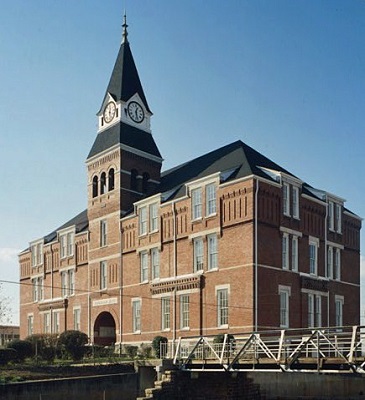
The institution eventually relocated to Atlanta’s West End and later joined the Atlanta University Center consortium. Historic campus structures such as Fountain Hall became enduring landmarks of Black higher education in the South.
MBC educated numerous influential African Americans in public life, civil rights, literature, and entertainment. Reverend Dr. Hosea Williams, a major leader in the Southern Christian Leadership Conference and a close associate of Dr. Martin Luther King Jr., attended Morris Brown in the 1950s, but did not graduate. Civil rights leader and former Atlanta mayor Andrew Young also studied at Morris Brown before transferring to Howard University.
Other notable alumni include:
- James Alan McPherson (1963) — Pulitzer Prize–winning author,
- Thomas J. Byrd (1977) — Actor known for his collaborations with filmmaker Spike Lee, and
- Beverly Harvard (1972) — First African American woman to serve as chief of the Atlanta Police Department.
These alumni reflect the college’s longstanding role in preparing Black leadership during periods of segregation and social change.
Despite severe financial and accreditation challenges in the early 21st century, the college endured thanks to sustained support from alumni, the church, and the community. In 2022, the institution regained accreditation, an achievement widely regarded as one of the most significant recoveries in the history of historically Black colleges and universities.
Today, Morris Brown College continues to symbolize African American educational independence, resilience, and the enduring influence of the Black church in American higher education.
Selected Sources:
- Morris Brown College. “History.”
- Morris Brown College. “Notable MBC Alumni.”
- New Georgia Encyclopedia. “Morris Brown College.”
- Oakland Cemetery. “Bishop Wesley John Gaines: A Leader Among Leaders.”
- The Clio Project. “Morris Brown College.”
- Anderson, James D. The Education of Blacks in the South, 1860–1935. Chapel Hill: University of North Carolina Press, 1988.