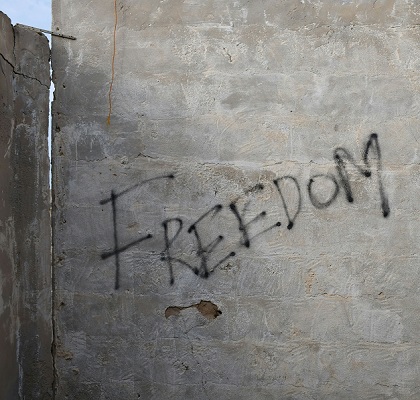
National Freedom Day



February 1 …
The earliest federally recognized commemoration of emancipation, National Freedom Day — observed each year on February 1 — commemorates the moment in 1865 when President Abraham Lincoln signed the joint resolution that would become the Thirteenth Amendment to the United States Constitution, abolishing slavery in the United States.
The observance was established in 1948 through the efforts of Richard Robert Wright Sr., a formerly enslaved man, educator, and civic leader. Wright envisioned a day that would not only celebrate the abolition of slavery, but also promote unity, citizenship, and civic responsibility among all Americans.
Congress approved the measure and President Harry S. Truman signed it into law, designating February 1 as National Freedom Day. Unlike federal holidays. However, it does not mandate closures of government offices or businesses, and its observance has remained largely educational and ceremonial.
From its inception, the observance has been most closely associated with Philadelphia, where Wright organized the first celebrations. Early observances centered on Independence Hall and the Liberty Bell, linking the abolition of slavery to the nation’s founding ideals. This tradition continues today.
In recent years, ceremonies at Independence National Historical Park — administered by the National Park Service — have included wreath-laying at the Liberty Bell, public readings, and reflections on citizenship and civil rights.
The National Park Service currently treats the observance as an opportunity for public history engagement and civic education. Its programming emphasizes the connection between the Thirteenth Amendment and broader struggles for freedom, often incorporating ranger-led talks, interpretive exhibits, and partnerships with local organizations.
In its most recent observances (2024–2025), the Park Service has continued to host in-person and virtual events in Philadelphia, highlighting themes of freedom, equality, and democratic participation. These programs are designed to reach both local audiences and a broader national public through digital outreach.
Beyond Philadelphia, it is observed more modestly across the United States. Schools and community organizations mark the day with lessons on emancipation, student essays, and discussions about civil rights and civic responsibility. While it lacks the large-scale celebrations associated with Juneteenth, its educational focus aligns with Wright’s original vision of a reflective and unifying observance.
Scholars and public historians note that the observance represents a transitional moment in American commemorative culture. Established decades before the widespread recognition of Juneteenth, it reflects an earlier effort to create a national narrative around emancipation. Its continued observance — though often understated — demonstrates the enduring importance of remembering the legal abolition of slavery and its implications for American democracy.
In sum, National Freedom Day stands as a foundational yet underrecognized commemoration, linking the nation’s constitutional transformation in 1865 to ongoing conversations about freedom and equality. Sustained by institutions like the National Park Service and local communities, it remains a meaningful, if quieter, part of the American calendar of remembrance.
Selected Sources:
- United States Congress. “Act to Designate February 1 as National Freedom Day.” Public Law 80-529 (1948).
- Harry S. Truman. Statement on Signing Legislation Establishing National Freedom Day, 1948.
- Richard Robert Wright Sr. Papers and writings on National Freedom Day. Philadelphia, PA: historical archives.
- National Park Service. “National Freedom Day Commemoration at Independence National Historical Park.” U.S. Department of the Interior, 2024–2025 event materials.
- Blight, David W. Race and Reunion: The Civil War in American Memory. Cambridge, MA: Harvard University Press, 2001.