

January 4 …
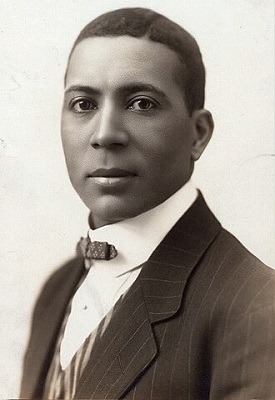
Sherman H. Dudley was a pioneering vaudeville entertainer and entrepreneur whose work helped lay the foundation for Black-owned theater circuits and expanded opportunities for African American performers in the early 20th century.
Born on January 4, 1872 in Austin (or Dallas), TX, Dudley grew up in the post-Reconstruction South, a time marked by severe racial segregation and limited opportunities for Black performers. While little is known about his formal education, he honed his talents through traveling performance circuits, learning the craft of entertainment in minstrel shows and vaudeville acts — some of the few professional avenues available to Black artists then.
Dudley’s early experiences with touring companies provided him valuable stage experience and a practical understanding of the entertainment business, which would later inform his entrepreneurial pursuits. He became well-known as a vaudeville performer celebrated for his comedy, singing, and commanding stage presence. Eventually, he emerged as one of the first African American performers to successfully transition into theater ownership and management.
In 1911, he founded the Dudley Circuit, a network of Black-owned theaters and booking agencies. The network aimed to offer employment and more equitable treatment for Black entertainers in an era when white-led circuits often exploited them.
Among Dudley’s most notable accomplishments was his involvement in the development of the Howard Theatre, which opened in 1910 and soon established itself as a leading venue for African American cultural performances. Through these initiatives, he played a pivotal role in professionalizing Black vaudeville and establishing a sustainable infrastructure for Black performers.
Dudley existed within a vibrant world of early 20th-century entertainers and entrepreneurs, alongside contemporaries such as Bert Williams and George Walker (Vaudevillian), who also pushed through racial barriers in American entertainment by way of their production enterprise, Williams and Walker Company.
Influenced by the broader vaudeville tradition and the urgent need for independent Black institutions in response to segregation, Dudley became a vital figure for younger performers. While he didn’t operate within a formal mentorship system, he effectively served as a mentor and gatekeeper, helping to launch careers by providing access to legitimate performance venues and fair contracts.
Dudley’s contributions were crucial in shaping the business aspects of African American entertainment, laying the groundwork for Black entrepreneurship in theater ownership and booking networks. Although he did not receive formal national accolades during his lifetime, his influence has been acknowledged in subsequent historical and cultural scholarship, which credits him with helping to establish the economic and institutional framework of Black performance culture.
Sherman H. Dudley died on January 9, 1919, but his legacy lives on through enduring venues like the Howard Theatre and the broader history of Black-owned entertainment enterprises that followed.