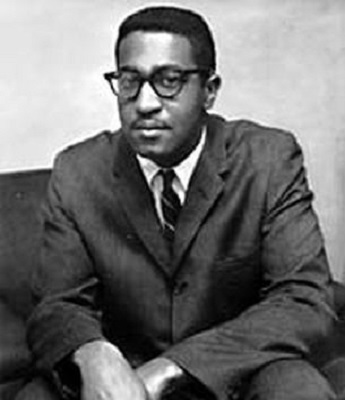
Franklin McCain


January 3 …
Franklin McCain was a foundational figure in the Civil Rights Movement whose courage and organizing helped ignite a nationwide campaign against segregated public accommodations.
Born January 3, 1941 in Union County, NC, McCain was raised in Washington, DC, where he graduated from Eastern High School before attending North Carolina A&T State College. There, he earned a BS in Chemistry and Biology in 1964, followed by an MA. His upbringing, which wove together church, community, and school experiences — and instilled in him a deep commitment to justice and collective action.
On February 1, 1960, McCain and three classmates — Ezell Blair Jr. (later known as Jibreel Khazan), Joseph McNeil, and David Richmond — initiated the Greensboro Sit-ins by sitting at a whites-only lunch counter at Woolworth’s in Greensboro. This act of civil disobedience galvanized a wave of similar protests across hundreds of cities, igniting student activism, contributing to the formation of the Student Nonviolent Coordinating Committee (SNCC), and pressing businesses and municipalities to end segregation in public spaces.
McCain drew inspiration from nonviolent protest traditions rooted in the teachings of Mahatma Gandhi and earlier civil rights movements. He collaborated with notable figures such as Diane Nash, John Lewis, Ella Baker, and various leaders from SNCC and the Southern Christian Leadership Conference (SCLC).
Along with his fellow Greensboro Four members, McCain set a powerful example for younger activists and student organizers who adopted the sit-in strategy. Although he may not be widely recognized for having formal protégés, his role as a civic leader and negotiator left an enduring impact on generations of local and campus organizers.
Throughout his life, McCain seamlessly integrated activism with professional and civic responsibilities. He pursued advanced studies, held positions in business and community organizations, and served on boards, including at his alma mater.
McCain received various honors, including an honorary doctorate from North Carolina A&T State University. He was publicly celebrated through museums and institutional tributes, notably at the International Civil Rights Center & Museum housed in the former Woolworth’s building where the Greensboro Four protested.
The legacy of Franklin McCain as a catalyst for nonviolent direct action and an advocate for the Civil Rights Movement remains firmly established in American social and cultural history.