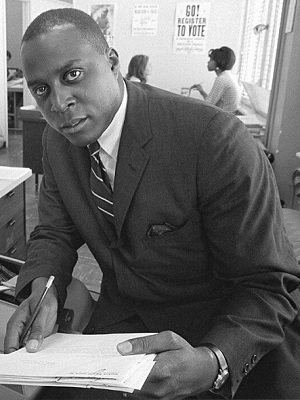
Vernon Jordan




August 15 …
Vernon Jordan was an attorney, corporate executive, and political adviser whose bridge-building career connected the Civil Rights Movement to corporate America and had lasting effects on access, representation, and leadership opportunities for African Americans across many sectors including media and entertainment.
Born on August 15, 1935 in Atlanta, Jordan grew up in the segregated South. He excelled academically, earning a B.A. from DePauw University and an LL.B. (J.D.) from Howard University School of Law.
Jordan’s early experiences in legal training and activism laid the foundation for his impactful career. He served as a civil-rights lawyer and organizer and became president of the university’s National Association for the Advancement of Colored People (NAACP) chapter. He collaborated with both grassroots and national civil rights organizations — experiences that would inform his future institutional and corporate strategies.
Jordan’s achievements encompassed both hands-on civil rights leadership and significant corporate and political positions. He held the role of executive director of the Voter Education Project and later became president of the National Urban League.
Transitioning into the private sector, he rose to become a senior executive, board member, and trusted adviser for major corporations and law firms, working to create pathways for Black professionals and advocating for corporate diversity initiatives. These corporations included American Express, J.C. Penney Corporation, Asbury Automotive Group, Dow Jones & Company, Revlon, Sara Lee, Corning, Xerox, and RJR Nabisco, among others.
Jordan’s expertise also extended to advising presidents and public figures across different administrations while serving as a bridge between advocacy groups and the realms of media, entertainment, and philanthropy. While there, he promoted the inclusion of Black leaders in those areas.
Influenced by civil rights icons of his era, such as Whitney Young and Roy Wilkins, Jordan’s organizational strategies were deeply informed by their legacies. He fostered a broad network of contemporaries, including Black political leaders, business executives, and cultural figures, maintaining close relationships with presidents and prominent entertainers who sought his guidance.
Jordan also dedicated himself to mentoring and sponsoring countless emerging Black executives, lawyers, and public servants, including Cory Booker, Eric Holder, and Bruce Gordon. These men and many other Jordan proteges later attained senior positions in corporations, nonprofits, and governmental roles. They often gained recognition independently within their professional and civic networks.
Jordan received numerous accolades acknowledging his contributions to civic and corporate leadership, including lifetime achievement awards from civil rights and business organizations, honorary degrees from several universities, and public commendations for his service on corporate boards and philanthropic initiatives.
Vernon Jordan influenced how African American leadership and perspectives were integrated into entertainment, culture, and public policy throughout the late 20th and early 21st centuries. His legacy is defined by his ability to translate civil rights aspirations into tangible institutional access, shaping boardrooms, media platforms, and executive pipelines.