

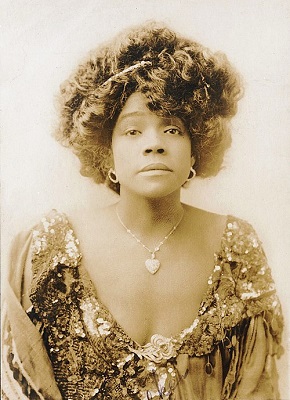


February 14 …
Aida Overton Walker was a trailblazing vaudeville performer, actor, singer, dancer, and choreographer whose artistry, professionalism, and advocacy transformed early 20th-century American stage culture and expanded possibilities for Black women in performance.
Born on February 14, 1880 in New York City, Walker received practical musical and theatrical training in her youth, entering professional performance in her mid-teens with touring companies like John W. Isham’s Octoroons and the Black Patti Troubadours. She married vaudevillian George Walker in 1899 and honed her skills through decades of touring, chorus work, and leadership roles in repertory companies rather than through formal conservatory education.
Growing up in New York’s Black theatrical community and training within touring troupes significantly influenced Walker’s techniques in singing, acting, and dance. Her talent and presence earned her national and international acclaim.
Walker starred in landmark productions with the Williams and Walker Company, including “The Sons of Ham,” “In Dahomey,” “Abyssinia,” and “Bandanna Land.” She performed solo in vaudeville and musical revues, and choreographed vaudeville shows like “The Red Moon” by J. Rosamond Johnson.
Notably, Walker popularized the cakewalk as a dignified art form. This earned her the title “Queen of the Cakewalk.”
Walker portrayed Salomé in prominent New York venues and taught fashionable dances to high-society patrons. Her performances defied negative stereotypes of Black women by showcasing refined, elegant, and technically skilled portrayals that expanded public perceptions and created new opportunities for Black entertainers.
Artistically, Walker drew inspiration from Black musical and dance traditions, classical stagecraft, and the collaborative environment of early 20th-century Black musical theater. Key influences included leaders of touring troupes such as Sissieretta Jones and the guidance of the Williams and Walker Company, where her husband, George Walker, and partner, Bert Williams, were instrumental collaborators.
Her contemporaries included prominent African-American performers of the time like Bert Williams and George Walker. In turn, Walker supported and nurtured younger Black women performers by producing female troupes like the Porto Rico Girls and the Happy Girls and advocating for tasteful, original work.
Walker’s honors were more cultural and public than formalized by modern awards. She gained international visibility by touring England with In Dahomey and received widespread critical acclaim in both Black and white press. Her repeated headlining on the vaudeville circuit and invitations to elite social gatherings underscored her recognition as an artist.
The profound mourning following her sudden death from kidney failure on October 11, 1914 — and the tributes that followed — attest to her significance. Her legacy continues through the elevation of Black female stagecraft, the professionalization of African-American musical theater, and the transmission of dance and performance practices.
The refined cakewalk and sophisticated stage persona of Aida Overton Walker influenced generations of performers and reshaped American entertainment and cultural history.
