August 4 …
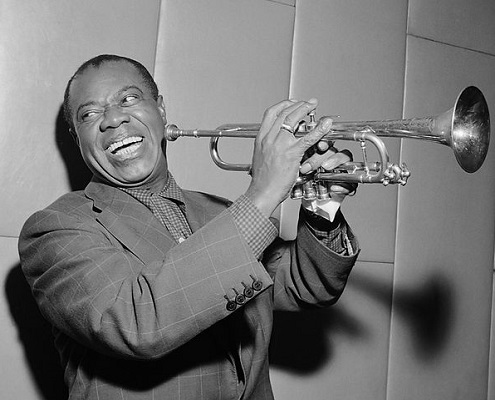
Nicknamed “Satchmo,” Satch,” and “Pops,” Louis Armstrong — one of the most influential figures in the history of music — was known for his innovative trumpet playing, distinctive gravelly voice, vibrant stage presence, and he revolutionized the world of jazz.
Born on August 4, 1901 in New Orleans, Armstrong grew up in poverty, in a neighborhood deeply immersed in African American culture and music, which played a formative role in shaping his artistic path. Early on, he displayed a passion for music, learning to play the cornet while serving time in a home for troubled boys. It was here that he first honed his skills, beginning a journey that would take him to international fame.
Armstrong’s musical career began in New Orleans, where he played in brass bands, local clubs, and riverboats. He later moved to Chicago in the 1920s, where he became part of the groundbreaking “King Oliver’s Creole Jazz Band.”
His time in Chicago marked a turning point in his career, as he began to experiment with his trumpet, transforming jazz from an ensemble-based genre to one where solo performances were at the forefront. His recordings with his band, The Hot Five — and later The Hot Seven — are considered some of the most important in the history of jazz. His virtuosic trumpet playing, combined with his improvisational genius, helped define the genre in ways that still resonate today.
In addition to his trumpet skills, Armstrong’s distinctive gravelly voice made him a beloved figure in both jazz and popular music. His vocal performances, such as on songs like What a Wonderful World and La Vie En Rose, became iconic, demonstrating his ability to infuse a song with both emotion and joy. His voice was unique for its rawness and authenticity, which was unlike anything heard before in popular music. Armstrong’s ability to blend his trumpet and vocal performances seamlessly into his live shows helped create a dynamic stage presence that captivated audiences around the world.
Armstrong’s influence spread far beyond jazz. He became one of the first African American artists to gain mainstream success, breaking racial barriers and challenging the music industry’s segregated practices. His international fame helped to reshape perceptions of Black musicians and laid the groundwork for future generations of African American artists in all genres of music.
Armstrong’s charismatic personality and sense of humor also made him a global ambassador for jazz, bringing the genre to audiences in Europe, Asia, and beyond. His international tours in the 1930s and 1940s cemented his status as a cultural ambassador for the United States.
Armstrong’s legacy extends far beyond his recordings and performances. His impact on the development of jazz as an art form cannot be overstated, as his innovations in improvisation, melody, and harmony shaped the way music was performed and heard for decades. His ability to communicate emotion through both his instrument and his voice made him a true pioneer, and his influence continues to be felt in nearly every form of music today.
Louis Armstrong died on July 6, 1971, but his contributions to music and his role as a trailblazer for African American artists remain an indelible part of American culture.