


Charles W. Chappelle


July 11 …
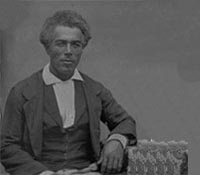
Charles W. Chappelle was an electrical engineer, architect, inventor, and businessman noted for his early aviation work and for leading the African Union Company in efforts to build trade and infrastructure between the United States and the Gold Coast (modern Ghana).
Born on July 11, 1872 in Eatonton, GA, one of 18 children of Rev. George W. Chappelle and Anna Johnson Chappelle, Charles Chappelle studied at Knox Institute and Morris Brown College, while also completing technical correspondence courses to become an electrical engineer and architect. Beginning his career in various trades during childhood, he briefly taught school.
Chappelle later served as the head electrician in industrial settings. Eventually, he worked as an architect and contractor in Brooklyn before shifting his focus to aeronautical design and international business.
As an aviation inventor, Chappelle dedicated over a year to constructing a long-distance airplane, which he showcased in 1911 at the First Industrial Aeroplane Show, held alongside the U.S. International Auto Show at Grand Central Palace in New York. Notably, he was the only African American to display an airplane at the event and received a medal for his efforts.
Chappelle’s aircraft model was also exhibited at the headquarters of the United States Aeronautical Reserve, and he served as vice president of the first African American airplane company established in 1911. His innovative design features garnered attention in The Air-Scout magazine for their focus on safety, and the May 1911 issue of The Crises: A Record of the Darker Races, Social Uplift (p. 7) published by the National Association for the Advancement of Colored People (NAACP).
In the realm of business and international development, Chappelle was the president and general manager of the African Union Company, founded around 1913. This company successfully raised substantial funds to modernize parts of the Gold Coast through the development of railroads, ports, and the exportation of cocoa, rubber, gold, and mahogany.
Chappelle’s contemporaries in this venture included Jay Emmett Scott, who later became chairman of the board and was associated with Howard University, along with Robert L. Vann, who lent his expertise to the company’s legal and financial matters during challenging times. Chappelle leveraged connections with U.S. industries — having dealings or proposals with firms like U.S. Steel — to bolster mining and timber export initiatives.
Chappelle’s legacy lies in his ability to connect technical innovation, Black entrepreneurship, and pan-African commercial goals in the early 20th century. He gained public acclaim for his aviation exhibit, highlighted by his 1911 medal, and remained active in organizations such as the United States Aeronautical Reserve.
Chappelle rubbed shoulders with early aviators and African American business figures of his time, and while records may not detail specific protégés or mentors, his collaborations with leaders like Jay Emmett Scott and interactions with individuals such as Robert L. Vann illustrate his role as a well-connected leader.
The projects and visibility of Charles W. Chappelle contributed significantly to Black technical and commercial progress before his passing in Pittsburgh on February 28, 1941.
