

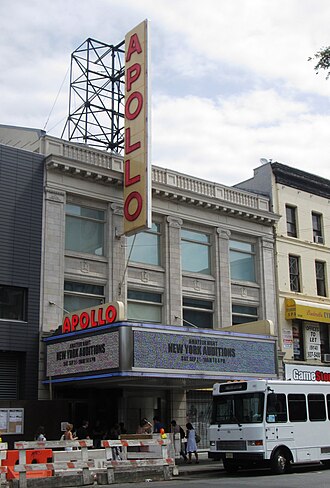
Apollo Theater

January 26
The Apollo Theater, located in the heart of Harlem, New York City, stands as a legendary monument in American music, history, and culture. Officially opened on January 26, 1934, the theater began as a vaudeville venue, but soon evolved into the most influential stage for African American performers in the United States. Its birth during the Harlem Renaissance positioned it as both a cultural beacon and a place of opportunity in an era marked by racial segregation and limited platforms for Black artists.
The Apollo quickly became a cornerstone for showcasing talent within the African American community, hosting performers who would go on to shape the future of American music. Its famous “Amateur Night” began in 1934, providing an unprecedented platform for aspiring artists to perform before a live audience. Many of the biggest names in entertainment got their start at the Apollo, including Ella Fitzgerald, James Brown, Lauryn Hill, and Stevie Wonder. This tradition of nurturing emerging talent continues today, making the Apollo not just a venue, but a launchpad for stardom.
The Apollo’s contribution to American music is immeasurable. It played a pivotal role in the development and popularization of jazz, blues, soul, R&B, and hip-hop. It wasn’t just a stage — it was a place where musical styles were tested, refined, and transformed. The sound that emerged from the Apollo helped define entire genres, influencing the direction of American popular music and giving voice to Black expression in a country where that voice was often marginalized.
Culturally, the Apollo became more than just a theater — it was a symbol of pride, perseverance, and community for Harlem and beyond. At a time when African American performers were routinely excluded from mainstream venues, the Apollo offered a space where their artistry was not only accepted but celebrated. The theater embodied the cultural vibrancy of Harlem, becoming a mirror of the community’s creative energy, resilience, and aspirations.
Amateur Night at the Apollo began in 1934, just months after the theater officially opened. It was the brainchild of promoter Ralph Cooper, who wanted to create a weekly event that gave unknown performers the chance to be seen and heard by a real audience. It quickly became one of the Apollo’s most beloved and enduring traditions, blending excitement, community participation, and raw talent in a way that no other venue had done before.
The format was simple but electrifying: aspiring singers, dancers, comedians, and musicians took the stage in front of a famously vocal crowd. If the audience loved you, they cheered with thunderous applause. If they didn’t? They booed — and sometimes the “executioner,” a tap dancer named “C.P. Lacey” (later in the tradition), would come out and escort you off the stage with a broom. This made Amateur Night a proving ground with real stakes. You had to win over the crowd to earn your spot.
One of the most iconic Amateur Night moments happened in 1934, when a 17-year-old Ella Fitzgerald took the stage — nervous and originally planning to dance. She changed her mind at the last second and sang instead, stunning the crowd with her voice. That performance launched a career that would span decades and redefine vocal jazz. It was the first of many breakthrough moments that made the Apollo a magnet for talent.
James Brown is another major star who got his big break at Amateur Night. In 1956, he and The Famous Flames performed at the Apollo, later recording their legendary live album Live at the Apollo in 1962. That record became one of the most influential live albums in music history and cemented the Apollo’s reputation as a place where greatness wasn’t just found—it was amplified.
Lauryn Hill, then just a teenager, also famously got booed at Amateur Night. But she came back stronger, later rising to fame with The Fugees and her Grammy-winning solo album, The Miseducation of Lauryn Hill. Her story represents the tough love of the Apollo audience — a crucible that shaped not just careers, but character.
Over the years, other now-legendary performers graced the Amateur Night stage, including Stevie Wonder, Gladys Knight, Jimi Hendrix, Michael Jackson (with the Jackson 5), and D’Angelo. Even more recently, artists like H.E.R. and Machine Gun Kelly have competed on that stage, showing the tradition is very much alive.
Amateur Night isn’t just a talent show — it’s a cultural institution. It has launched hundreds of careers and continues to be a rite of passage for performers seeking authenticity and connection. It embodies the Apollo’s mission of discovery, empowerment, and celebration of Black excellence and creativity.
Throughout the civil rights movement and the changing tides of American society, the Apollo maintained its relevance, hosting performances that reflected the struggles and triumphs of the times. Its stage was home not only to musical acts, but also to spoken word, dance, and activism. The theater became a cultural forum where art and social commentary intertwined, giving expression to the evolving Black experience in America.
In more recent decades, the Apollo has undergone periods of restoration and revival, but its mission has remained the same: to celebrate and elevate Black culture. It continues to present dynamic programming that honors its rich legacy while embracing the future. Educational initiatives, community events, and international tours have extended its reach beyond Harlem, reinforcing its status as a global cultural institution.
The Apollo Theater’s legacy is one of excellence, innovation, and inclusion. It stands as a testament to the enduring power of Black creativity and the unifying force of music and performance. From its historic stage have come voices that changed the world, rhythms that redefined genres, and moments that shaped the American story. The Apollo is not just a building — it’s a cultural landmark, a symbol of possibility, and a living archive of American artistic achievement.
* Photo by Beyond My Ken
