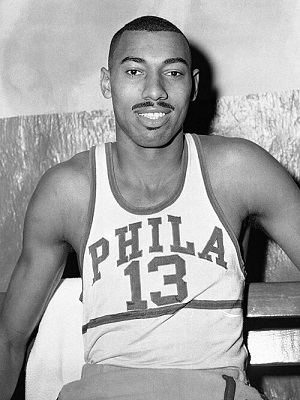
Wilt Chamberlain


August 21 …
Wilt Chamberlain was a transformative figure in basketball, renowned not only for his extraordinary skills on the court but also for his significant impact on American sports and culture.
Born on August 21, 1936 in Philadelphia, Chamberlain grew up in a household that valued both athletics and education. As a child, he excelled in various sports, but basketball ultimately captured his heart. His impressive height — reaching 7′-1″ as a teenager — coupled with his athletic prowess quickly set him apart from his peers.
Chamberlain attended Overbrook High School, where he gained national recognition for his commanding performances, which led him to the University of Kansas. Under coach Phog Allen, he showcased his incredible talent and guided the Jayhawks to the NCAA championship game in 1957, leaving a lasting mark on college basketball.
Entering the NBA in 1959, Chamberlain rapidly established himself as a dominant force. Throughout his career, he played for the Philadelphia/San Francisco Warriors, the Philadelphia 76ers, and the Los Angeles Lakers, setting numerous records, most notably scoring 100 points in a single game in 1962 — a record that still stands today.
Chamberlain was honored as the NBA Rookie of the Year, won four NBA championships, earned two MVP awards, and was selected as an All-Star 13 times. His extraordinary statistics, including an average of over 30 points and 22 rebounds per game throughout his career, redefined the possibilities within the sport.
Chamberlain’s influence extended beyond the basketball court. He played a pivotal role in breaking racial barriers in a predominantly white sport and advocated for greater inclusivity within the league.
His friendships with contemporaries such as Bill Russell and Jerry West, along with his engagements with figures like Muhammad Ali, reflect a wider involvement with issues of race, equality, and social justice during the turbulent 1960s and 1970s. Chamberlain often voiced his concerns about discrimination and emphasized the importance of representation in professional sports, using his platform to champion social causes.
Chamberlain’s commitment to mentorship also contributed to shaping the next generation of players. He guided many younger athletes, including future stars like Magic Johnson and Kareem Abdul-Jabbar, imparting values of hard work and discipline. He shared insights on maintaining physical fitness and understanding the mental aspects of the game, fostering a sense of continuity in the sport that benefitted aspiring players.
Wilt Chamberlain’s legacy is adorned with honors and accolades that celebrate his profound contributions to basketball and American culture. He was inducted into the Naismith Memorial Basketball Hall of Fame in 1979, and his jersey numbers, 13 and 24, have been retired by multiple organizations.
Beyond basketball, Chamberlain explored various ventures in entertainment and business, making appearances in films and television that showcased his multifaceted character. In 1996, he was honored as one of the 50 Greatest Players in NBA History, reinforcing his enduring influence on the game.
Chamberlain’s story transcends basketball, embodying a unique blend of athletic prowess and cultural significance. His journey reflects the evolution of the sport, the necessity for social engagement, and the challenges faced by African American athletes in the mid-20th century.
Wilt Chamberlain remains a towering figure in American basketball and in the broader narrative of sports and society.