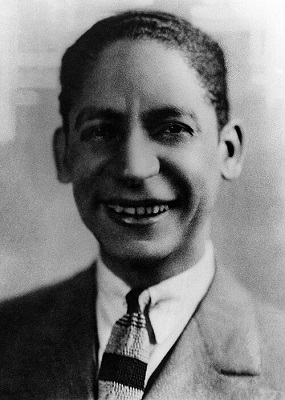
Jelly Roll Morton
October 20 …
Jelly Roll Morton was a pioneering jazz pianist, composer, and bandleader whose innovations in rhythm, harmony, and improvisation helped define early jazz and establish it as a distinctly American art form with global cultural influence.
Born Ferdinand Joseph LaMothe on October 20, 1890 in New Orleans, Morton grew up in a vibrant musical landscape enriched by African, Caribbean, and European influences. He began playing piano at a young age and performed in local brothels, dance halls, and parades, crafting a style that combined ragtime, blues, and syncopated rhythms.
Morton’s education was primarily informal, gained through his performances and observations of seasoned musicians in New Orleans, notably the innovative cornetist Buddy Bolden, whose groundbreaking improvisations significantly impacted him. He adopted the nickname “Jelly Roll” early in his career, a nod to both his flamboyant character and the colorful vernacular of New Orleans’ musical culture.
His achievements spanned composition, performance, and recording. By the 1920s, Morton had relocated to Chicago and later New York, where he led bands and produced some of the earliest jazz recordings, highlighting intricate arrangements and collective improvisation. He controversially claimed to have invented jazz, a statement that has sparked debate among historians.
Nevertheless, his compositions, such as “King Porter Stomp” and “Black Bottom Stomp,” became jazz standards and inspired countless musicians. As an example of note, in 1935, “King Porter Stomp,” which was arranged by Fletcher Henderson, became Benny Goodman’s first hit and a swing standard, but Morton didn’t receive any royalties from the recordings.
Morton collaborated with contemporaries like Louis Armstrong, Kid Ory, and his own group, the Red Hot Peppers, mentoring younger performers and helping to disseminate jazz throughout the United States and beyond.
Morton’s legacy transcends his technical contributions, encompassing a broader cultural and social narrative in America. He played a crucial role in elevating jazz from local entertainment to a nationally recognized art form, enhancing the visibility of African American musicians during a time of profound racial segregation.
Although formal recognition during his lifetime was scarce, Morton has since been honored posthumously. These honors include being inducted into the Jazz Hall of Fame and ongoing scholarly acknowledgment of his pivotal role in shaping jazz as both a musical genre and a social movement.
The recordings of Jelly Roll Morton continue to educate and inspire musicians around the world, solidifying his status as a foundational figure in American music and culture.