November 9 …
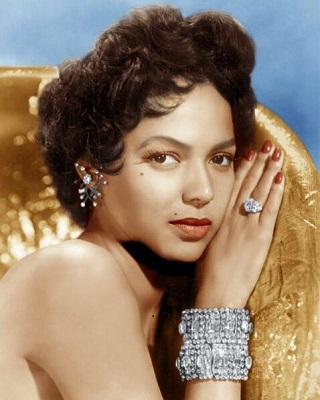
Dorothy Dandridge was a trailblazing American actress and singer whose brief but groundbreaking career challenged racial barriers in Hollywood and reshaped the possibilities for Black performers in film.
Born on November 9, 1922 in Cleveland, OH, Dandridge was nurtured in a theatrical setting that ignited her passion for performance from an early age. Her mother, Ruby Dandridge, an actress and entertainer, inspired her daughters to chase careers in show business. As a child, Dorothy teamed up with her sister Vivian Dandridge to form a singing duo called The Wonder Children, touring churches and theaters across the United States.
Although her formal education was limited due to the demands of performance, she received extensive hands-on training in music, dance, and stagecraft while immersed in the entertainment circuit. These formative experiences not only exposed her to the harsh realities of segregation in American entertainment but also honed her stage presence and vocal abilities.
Dandridge’s film career unfolded gradually, with small roles in Hollywood during the 1930s and 1940s. She appeared in films like Sun Valley Serenade and Stormy Weather, sharing the screen with legendary entertainers such as Lena Horne and Cab Calloway. Her defining moment arrived in 1954 with the musical film Carmen Jones, directed by Otto Preminger.
This remarkable performance earned her an Academy Award nomination for Best Actress, making her the first African American woman to receive a nod in that category. The role catapulted her to international stardom and showcased the capability of Black actresses to lead major motion pictures, marking a pivotal moment in Hollywood’s evolving approach to race and representation.
At the zenith of her career, Dandridge was part of a transformative generation of influential Black entertainers reshaping American popular culture. Together with contemporaries like Harry Belafonte, who co-starred with her in Carmen Jones, and iconic figures such as Nat King Cole and Sammy Davis Jr., she left an indelible mark on the entertainment landscape.
Younger performers, including Halle Berry, who would portray Dandridge in the biographical film Introducing Dorothy Dandridge, looked up to her as a source of inspiration. Dandridge drew strength from earlier Black performers like Josephine Baker, whose global success demonstrated that Black artists could captivate international audiences.
Despite facing challenges due to the limited roles for Black actresses in mid-20th-century Hollywood, Dandridge’s influence endures. She received a Golden Globe nomination for her work in Porgy and Bess and emerged as one of the first Black actresses to achieve leading-lady status in mainstream American cinema.
Dandridge’s grace, talent, and tenacity opened doors for future generations of performers and challenged Hollywood’s segregated casting practices.
Today, Dorothy Dandridge is celebrated as a cultural trailblazer whose achievements broadened the representation of Black women on screen and helped redefine the narrative of American film history.