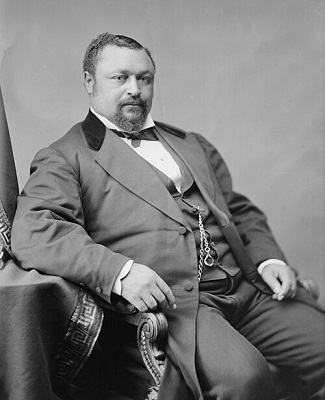
Blanche K. Bruce


March 1 …
Blanche K. Bruce was a pioneering African American statesman whose life and career embodied the possibilities of Black leadership during the Reconstruction era and its immediate aftermath.
As the first African American to complete a full term in the U.S. Senate, he significantly contributed to the advocacy for civil rights, education, and economic opportunities for formerly enslaved individuals, playing a pivotal role in shaping American society, law, and culture in the post-Civil War era.
Born on March 1, 1841 in Farmville, VA, Bruce entered the world as a slave, but was raised under relatively favorable circumstances by his white father and Black mother. This unique upbringing afforded him access to basic education at a time when most enslaved children were denied formal schooling.
Following the Civil War, he moved to Mississippi, where he became actively involved in Republican politics and the fight for African American civil and political rights during the Reconstruction period. Influenced by prominent Black leaders and abolitionists of his time, including Frederick Douglass, Bruce navigated the complexities of governance and advocacy in a racially divided nation.
Bruce’s achievements were remarkable for his time. In 1875, he was elected to the U.S. Senate representing Mississippi, making history as the first African American to serve a full six-year term. Throughout his tenure, he advocated for civil rights legislation, ensured voting rights enforcement, and fought for equitable access to education for Black citizens.
Bruce also pushed for land reform and economic development initiatives in the South, understanding that political rights were insufficient without economic opportunities. His congressional contemporaries included Hiram Revels, the first African American U.S. Senator, and supportive Northern allies in the Republican Party, while he encountered strong opposition from entrenched segregationists at both state and federal levels.
After his Senate career, Bruce continued to impact public life by educating and mentoring young African Americans in political activism and public service, highlighting the importance of civic involvement and leadership. He respected earlier civil rights leaders like Booker T. Washington and collaborated with peers dedicated to advancing Black social and economic progress.
Throughout his life, Bruce received considerable recognition for his service and leadership, including appointments to key federal positions such as Register of the Treasury, elevating him to one of the highest-ranking African Americans in federal service at the time.
The life and career of Blanche K. Bruce are a testament to resilience, strategic advocacy, and the lasting influence of African American leadership in shaping the social and political landscape of the United States.