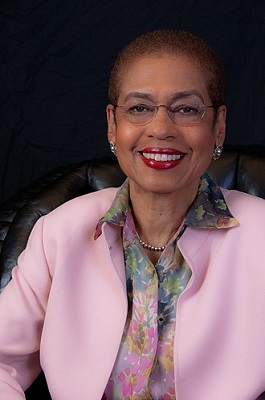
Eleanor Holmes Norton



June 13 …
Eleanor Holmes Norton is a distinguished American lawyer, civil rights advocate, and long-serving delegate to the U.S. House of Representatives whose leadership has advanced social justice, expanded democratic participation, and shaped national conversations on equality, urban policy, and human rights.
Born on June 13, 1937 Washington, DC, Norton grew up during a time of legal segregation in the nation’s capital, an experience that deeply shaped her lifelong dedication to dismantling racial barriers and fortifying democratic institutions. She excelled academically, earning her B.A. from Antioch College and her LL.B. from Yale Law School, where she enhanced her understanding of civil liberties, constitutional law, and public policy.
Early mentorship under prominent civil rights lawyers and scholars nurtured her philosophy that linked legal literacy with grassroots activism and institutional reform.
Norton first gained national recognition as Associate General Counsel for the American Civil Liberties Union, working on landmark cases involving civil rights, gender discrimination, and free speech. She later served under President Jimmy Carter as Chair of the Equal Employment Opportunity Commission, where she strengthened enforcement mechanisms and advocated for workplace equity.
Influenced by contemporaries like A. Leon Higginbotham Jr. and Archibald Cox, whose commitments to fairness and accountability mirrored her own, Norton developed a reputation as a principled advocate adept at navigating complex legal frameworks to protect individual rights and expand access to opportunity.
In 1991, Norton was elected as the non-voting Delegate to the U.S. House of Representatives representing the District of Columbia, a role she has maintained for decades. In Congress, she has tirelessly championed full voting representation for DC residents, equal access to federal programs, and progressive urban policies.
Her work spans issues such as affordable housing, healthcare access, environmental justice, and workers’ rights, often collaborating with peers like John Lewis and Barbara Lee on legislation and social initiatives. Her constituents consider her a steadfast voice for fairness and inclusion, and she has mentored emerging leaders from the District and beyond who share her commitment to democratic empowerment and civil liberties.
Throughout her career, Norton has received numerous accolades and awards recognizing her contributions to law, public service, and human rights, including lifetime achievement awards from various civil rights organizations, legal associations, and educational institutions. Her legacy is evident in her unwavering advocacy for representation, her influence on national policy debates surrounding equality and justice, and her impact on generations of activists, lawyers, and public servants.
As a bridge between grassroots movements and federal governance, the work of Eleanor Holmes Norton has profoundly shaped American politics, culture, and the ongoing pursuit of democracy for all citizens.