


Montford Point Marines
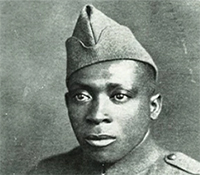
June 1 …
The Montford Point Marines were the first African American men to serve in the United States Marine Corps, and their courage and discipline reshaped the military, advanced national security, and accelerated the struggle for racial justice in America.
This broader movement toward inclusion was fueled by civil rights advocates like A. Philip Randolph, whose campaigns for fair employment and military opportunities significantly influenced federal policies during World War II.
On June 25, 1941, President Roosevelt signed Executive Order 8802, which prohibited government agencies and federal contractors from denying employment in industries involved in defense production based on race, creed, color, or national origin. It marked the first presidential directive on race since the Reconstruction era. Additionally, the order mandated that the armed services, including the Marine Corps, actively recruit and enlist African Americans.
On June 1, 1942 — responding to civil rights activism and wartime manpower demands — the Marine Corps began recruiting Black men for military service.
Initially confined to segregated units and often assigned to support roles, the Marines at Montford Point — located near Camp Lejeune in Jacksonville, NC — trained intensely in preparation for overseas deployment, even as the nation denied them full equality. Among the early leaders was Gilbert H. Johnson, one of the first Black drill instructors, renowned for his high standards and affectionately dubbed “the Pied Piper of Montford Point.”
Their service during World War II and the early Cold War challenged the deep-rooted segregation within the armed forces and established crucial foundations for the integration of the U.S. military, leaving a profound impact on American society and culture.
From 1942 to 1949, nearly 20,000 African American men completed their training at Montford Point, serving in critical campaigns across the Pacific, including Saipan, Iwo Jima, and Okinawa, where they played essential roles in ammunition and supply operations amid combat, supporting frontline efforts. Their exemplary performance challenged and dismantled prevailing racist stereotypes about the abilities of Black servicemen.
In 1948, President Truman signed Executive Order 9981, which mandated the desegregation of the armed forces, and by 1949, the Marine Corps began integrating its ranks, closing the Montford Point training facility. This transition marked a significant stride toward equality within one of the country’s most traditional institutions.
The legacy of these Marines continued to resonate long after integration. Veterans like Edgar R. Huff and Frederick C. Branch — who became the first African American Marine Corps officer in 1945 — emerged as symbols of resilience and professional excellence. Their service enhanced national security by broadening the Corps’ manpower and talent pool, while upholding democratic ideals during a global struggle against fascism and later communism.
Many Montford Point veterans evolved into community leaders, contributing actively to postwar civic life and the advancing Civil Rights Movement, showcasing how military service could catalyze broader social change.
In 2012, the Montford Point Marines were collectively honored with the Congressional Gold Medal, one of the nation’s highest civilian honors, in recognition of their historic contributions and sacrifices. Individual members also received long-overdue acknowledgments and public tributes, with Montford Point being renamed Camp Gilbert H. Johnson to honor the pioneering drill instructor.
Their story has become a significant chapter in American military history, embodying resilience, patriotism, and the continued pursuit of aligning the nation’s democratic ideals with its practices. Through their unwavering service amid discrimination, the Montford Point Marines redefined the concepts of honor and equality within the United States Armed Forces.
