
Ike Jones
December 23 …
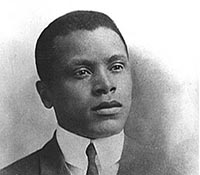
Ike Jones was a groundbreaking American actor, producer, and director whose career challenged racial barriers in Hollywood and expanded opportunities for African Americans in film and television during the mid-20th century.
Born on December 23, 1929, in Santa Monica, CA, Jones grew up in Los Angeles and attended the University of California, Los Angeles, where he studied film and theater arts during a time when few African Americans had access to such programs. In June 1953, he became the first Black American graduate of the UCLA School of Theater, Film and, Television.
Emerging at a time when Black creatives faced significant restrictions in the industry, Jones became one of the first African Americans to write, produce, and direct a feature film distributed internationally, carving out a space behind the camera as well as in front of it. His determination and subtle defiance of segregation-era norms positioned him as a pioneering figure in the history of American entertainment.
In the 1950s and early 1960s, he appeared in films like Giant and A Raisin in the Sun, sharing the screen with prominent performers like Sidney Poitier and Harry Belafonte, whose successes opened doors for Black actors. Jones absorbed valuable lessons from these contemporaries while nurturing ambitions that extended beyond acting into writing and directing.
In the late 1950s, Jones worked for production companies that oversaw projects for Harry Belafonte and Burt Lancaster. Then, in the 1960s, he headed the Nat King Cole company, Kell-Cole Productions, that produced the singer’s highly successful live shows.
In 1966, Jones reached a historic milestone with the release of A Man Called Adam — starring Sammy Davis Jr. and Louis Armstrong — which he produced. This made him the first Black American to serve as a producer on a major motion picture.
Soon after, he wrote, produced, and directed the independent film The Black Pearl (1968). That project positioned him among the first African Americans to lead a major motion picture released overseas.
His work coincided with a time of profound cultural change, paralleling the rise of the Civil Rights Movement and Black Power Movement and foreshadowing the Blaxploitation wave that would later feature filmmakers like Melvin Van Peebles and actors such as Richard Roundtree.
Jones’s behind-the-scenes leadership subtly influenced younger creatives seeking greater autonomy in storytelling and production, demonstrating that African Americans could assert authority in all facets of filmmaking.
Beyond his professional achievements, Jones’s personal life captured national attention. After the death of actress Inger Stevens in 1970, he disclosed their secret marriage — an interracial union at a time when such relationships still sparked controversy in parts of the United States. This revelation underscored the social tensions of the era and highlighted Jones’s navigation of both public and private challenges in a racially divided society.
Although he did not receive the widespread accolades afforded to some of his contemporaries, his pioneering role has increasingly been recognized by film historians who credit him with helping to dismantle barriers that limited Black participation in Hollywood’s creative leadership.
Through perseverance, artistry, and courage, Ike Jones secured a lasting place in American film and cultural history as a figure who expanded the possibilities for future generations.