Banneker Douglass Tubman Museum


February 24 …
The Banneker-Douglass-Tubman Museum — formerly known as the Banneker-Douglass Museum — located in Annapolis, MD stands as a significant institution dedicated to preserving and promoting the rich cultural, historical, and artistic contributions of African Americans in the state and across the nation.
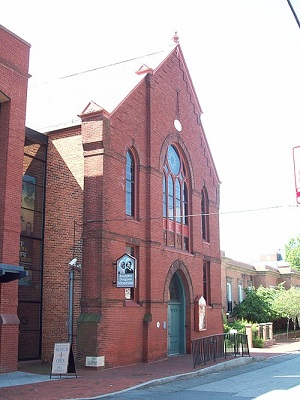
On February 24, 1984, the historic Mt. Moriah AME Church became the Banneker-Douglass Museum of Afro-American Life and History, and it was dedicated as Maryland’s official state museum on African American history and culture.
Originally established by free African Americans and enslaved people, Mt. Moriah became a sanctuary not only for worship but also for activism, education, and community organizing. The church was a center for civil rights advocacy and social justice when it provided support for the abolitionist movement and later served as a gathering place for those fighting for equal rights.
The museum was originally founded in the 1970s by local activists and a Maryland Commission in a “Save Mt. Moriah” campaign to restore and transform this historic Mt. Moriah AME Church, originally constructed in 1875. Its establishment also provided a response to the increasing demand for spaces that recognize and celebrate African American history, particularly within the context of Maryland’s rich African American heritage.
Initially named the Banneker Douglass Museum to honor the legacy of Benjamin Banneker (an African American mathematician, naturalist, farmer, and surveyor) and Frederick Douglass (esteemed abolitionist and statesman). In 2024, the name was expanded to also acknowledge Harriet Tubman, the legendary abolitionist and conductor of the Underground Railroad.
Over the years, the museum’s focus has broadened to encompass not only exhibitions dedicated to these three figures, but also artistic displays, cultural programs, and educational initiatives that address wider themes of racial justice, identity, and empowerment.
Influenced by the Civil Rights Movement of the 1960s and 1970s and the need to address the underrepresentation of African Americans in mainstream cultural institutions, the museum has become a crucial venue for showcasing the artistic and historical narratives of marginalized communities. Through its exhibitions, programs, and community outreach, the museum has emerged as a vital cultural resource, bridging the past and present, while enriching the understanding of African American history and heritage.
Its exhibitions feature both contemporary and historical works, providing a platform for Black artists, writers, and scholars to express their experiences and perspectives.
The museum has received acclaim for its dedication to community engagement, forming partnerships with schools, local organizations, and cultural institutions.
The Banneker-Douglass-Tubman Museum has earned recognition for educating the public about African American contributions to society, art, and culture, establishing itself as an essential institution for historical preservation and artistic expression.