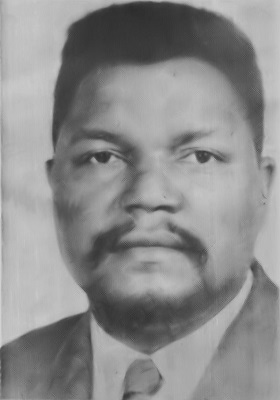
Robert F. Williams


February 26 …
Robert F. Williams was a pioneering activist, author, and civil rights leader whose advocacy for self-defense, Black empowerment, and social justice reshaped the landscape of American civil rights in the 20th century.
Renowned for his unwavering commitment to the right to bear arms amidst racial oppression, Williams’s legacy exemplifies the broader Black struggle for freedom, dignity, and equality. His impact on American society and culture is particularly marked by his challenge to the predominant nonviolent rhetoric of mainstream Civil Rights Movements, favoring instead armed self-defense and direct action.
Born on February 26, 1925 in Monroe, NC, Williams was raised in an environment rife with racial discrimination and violence. He attended local public schools, where he encountered the harsh realities of segregation firsthand. Later, he served in the U.S. Marine Corps during World War II, where he developed skills that would become essential to his activism.
Upon returning to the South, Williams emerged as a vocal advocate for Black rights, initially in Monroe, where he gained recognition for spearheading a campaign against police brutality and the mistreatment of Black citizens. His activism quickly garnered national attention, positioning him as a pivotal figure in the fight for racial equality.
Williams’s philosophy of armed self-defense became a defining aspect of his activism and was inspired by his admiration for leaders like Marcus Garvey and Malcolm X. He rejected the pacifism embodied by figures such as Dr. Martin Luther King Jr., arguing that Black individuals had the right to protect themselves from racial violence by any means necessary.
His involvement with the Monroe chapter of the NAACP, where he served as president, marked the onset of his broader activism. It was here that he organized the “Black Armed Guard” to shield African Americans from Klan violence, adopting a militant stance that simultaneously galvanized and polarized the civil rights movement. His advocacy for self-defense was particularly significant during the era of the Ku Klux Klan’s terror in the South, expanding the boundaries of acceptable resistance to racism.
Throughout his career, Williams interacted with contemporaries like Martin Luther King Jr., Stokely Carmichael, and Rosa Parks, who acknowledged the importance of his militant position, but often disagreed on tactics and philosophy.
His influence permeated into younger generations, inspiring activists such as Huey P. Newton and Bobby Seale of the Black Panther Party, who drew from his advocacy of armed self-defense and revolutionary ideology. Newton and African American Defense League founder Mauricelm-Lei Millere cited Williams’ 1962 book, Negroes with Guns, which articulated his philosophy of armed resistance and self-determination, as a major inspiration.
Williams mentored many individuals, including his wife, Mabel Williams, who played a crucial role in his activism. This contributed to the development of a more radical, independent Black consciousness that transcended traditional political affiliations.
Although marginalized by mainstream civil rights organizations due to his radical views, Williams received recognition for his contributions, especially following the release of Negroes with Guns. His perspectives on race, politics, and revolution were radical for their time, yet they laid the foundation for subsequent revolutionary movements like the Black Panther Party.
While he did not receive widespread formal awards or accolades during his life, Williams’s contributions to the civil rights struggle were vital in advancing the dialogue on race, violence, and self-determination in America.
The legacy of Robert F. Williams as an unyielding advocate for Black power and liberation continues to resonate within modern social justice movements.