
February 21 …
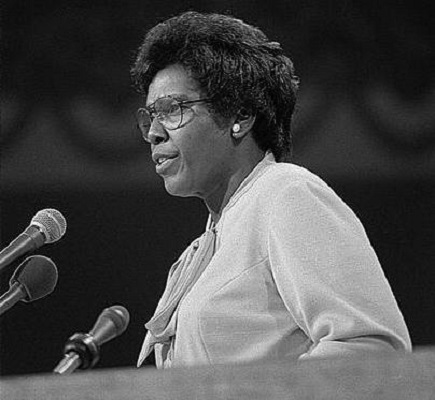
Barbara Jordan was a towering figure in American law and politics whose eloquence, moral clarity, and constitutional insight made her one of the most respected voices of the 20th century.
Born on February 21, 1926 in Houston, TX, Jordan rose from humble beginnings in the city’s Fifth Ward to prominence on the national stage. She became an emblem of principled leadership and democratic integrity, leaving an indelible impact on American political culture and history.
Jordan’s formative years were defined by discipline, a strong emphasis on education, and a profound respect for civic duty, nurtured by her parents and honed through her academic achievements. She attended Texas Southern University and subsequently Boston University School of Law, where she developed the commanding speaking style and analytical rigor that would characterize her career.
Influenced by constitutional scholars, civil rights advocates, and the oratorical traditions of the Black church, she came to see the law as both a shield and an instrument of justice. Recognizing her exceptional talent for persuasion, her early mentors in Texas politics encouraged her to enter public office, despite facing significant racial and gender obstacles.
Jordan’s political achievements were nothing short of historic. She became the first African American woman elected to the Texas Senate, and later, the first Southern Black woman in the United States House of Representatives. In Congress, she earned a reputation for bipartisanship, intellectual rigor, and steadfast dedication to the Constitution.
Her national profile rose dramatically during the Watergate hearings, where her televised address on constitutional accountability captivated the country and established her as a moral authority in American politics. She later chaired the U.S. Commission on Immigration Reform, impacting national policy with her balanced and compassionate approach.
Jordan’s appeal transcended traditional political boundaries. People across the ideological spectrum admired her integrity, courage, and distinctive voice. She shared the political arena with contemporaries such as Shirley Chisholm, John Lewis, and Lyndon B. Johnson, as well as later figures like Ann Richards, all of whom emerged from Texas’s dynamic political landscape.
Although Jordan rarely spoke of personal role models, she expressed a profound admiration for the framers of the Constitution and civil rights pioneers who taught that democracy demands constant vigilance and active participation.
Jordan’s contributions were honored with numerous awards and accolades, including the Presidential Medal of Freedom, the highest civilian honor in the nation. Even after stepping away from electoral politics due to health concerns, Jordan continued to impact American society as a professor, public speaker, and ethical guide for a new generation of leaders.
Today, Barbara Jordan is celebrated not only for her groundbreaking achievements, but for redefining the essence of principled leadership—rooted in law, driven by justice, and articulated with a voice that continues to resonate in American history.