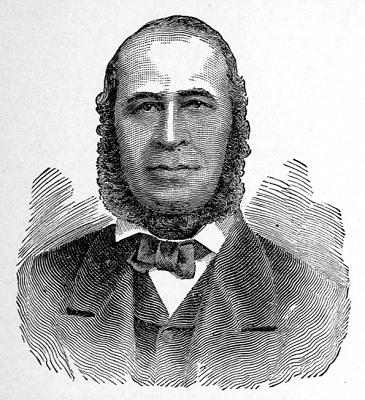
Charles Bennett Ray


December 25 …
Charles Bennett Ray was a minister, editor, and civil rights advocate whose work in Black publishing and reform helped shape the political voice of African Americans in the decades leading up to the Civil War.
Born on Decembe 25, 1807 in Falmouth, MA, Ray rose from humble beginnings to become one of the most influential Black intellectuals in antebellum America, utilizing the printed word, the pulpit, and the courtroom to advocate for racial justice, civic engagement, and cultural self-definition.
Ray’s most significant contribution was his leadership in publishing as the editor and co-founder of The Colored American, one of the most important Black-owned newspapers of its time. Through its pages, he vigorously opposed slavery, segregation, and racial violence while championing education, moral reform, and active political participation within Black communities.
At a time when mainstream newspapers often overlooked or misrepresented Black voices, Ray played a crucial role in establishing an independent Black press as a formidable intellectual force that shaped national discourse on citizenship and freedom.
In addition to his work in publishing, Ray was a prominent social justice activist engaged in legal and political organizing. He was instrumental in the Legal Rights Association, which employed litigation to combat racial discrimination in New York City, particularly concerning segregation in public transport.
Additionally, Ray participated in vigilance committees that assisted freedom seekers escaping bondage, risking personal safety in defiance of fugitive slave laws. As a minister, he combined religious leadership with political activism, asserting that faith called for resistance against injustice rather than passive endurance.
Ray drew inspiration and mentorship from both religious and reform traditions. Early guidance from Black clergy and abolitionist thinkers shaped his belief in moral persuasion and self-help. He collaborated with and was influenced by contemporary figures such as Samuel Cornish, an early Black newspaper editor; businessman and abolitionist James Forten; radical organizer and publisher David Ruggles; and Frederick Douglass, whose oratory and journalism broadened the reach of Black abolitionist ideas.
While Ray sometimes diverged in strategy or tone from his peers, he shared a commitment to intellectual rigor and public responsibility. His heroes were not specific individuals but the ideals of freedom, education, and self-representation that characterized the Black reform movement.
Although Ray received no formal accolades during his lifetime, as his work unfolded in a period that seldom recognized Black achievements with official honors, his legacy lives on in the institutions and traditions he helped establish — the Black press, faith-based activism, and legal resistance to discrimination.
Today, Charles Bennett Ray is remembered as a foundational figure in American publishing and civil rights history, one who grasped that control over narrative constitutes a form of power, and who wielded that power to affirm Black humanity, dignity, and complete inclusion in the American narrative.