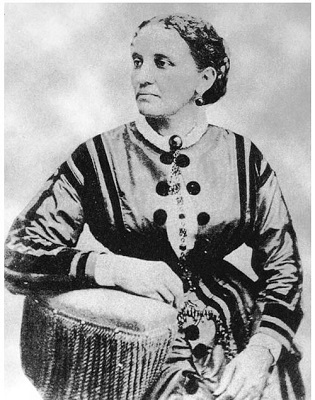
Elizabeth Keckley


February 1 …
Elizabeth Keckley was a remarkable figure in 19th-century American history, whose life journey from enslavement to prominence as a writer, businesswoman, and confidante to a First Lady offers a powerful testament to resilience and self-determination.
Born in February 1818 (exact date is unknown) in Dinwiddie County, VA, Keckley spent the first 30 years of her life in bondage. Despite enduring years of hardship, abuse, and family separation, she developed an extraordinary talent for sewing, a skill that would become her path to freedom. In 1855, through her own work and with the support of sympathetic patrons, she raised the money to purchase freedom for herself and her son, a defining act of independence and resolve.
After gaining her freedom, Keckley moved to Washington, D.C., where she built a successful career as a dressmaker. Her exceptional craftsmanship and professionalism quickly garnered the attention of Washington’s elite, including the wives of prominent politicians.
In 1861, she became the personal dressmaker to Mary Todd Lincoln, wife of President Abraham Lincoln. More than just a seamstress, Keckley became a close confidante and companion to the First Lady during some of the most turbulent years in American history, offering emotional support through the Civil War and the loss of the Lincolns’ son Willie. Her position placed her at the heart of national events, providing her with a rare vantage point as both a participant in and observer of the political and personal dramas unfolding in the White House.
In 1868, Keckley published her memoir, Behind the Scenes: Or, Thirty Years a Slave and Four Years in the White House. The book was one of the first published works by a formerly enslaved Black woman and offered a deeply personal account of her life in slavery, her relationship with Mary Lincoln, and her experiences in the Lincoln White House.
While the memoir was groundbreaking in its candor and scope, it was met with controversy. Many critics accused Keckley of betraying Mrs. Lincoln’s confidence, and the book was largely dismissed at the time. Yet in retrospect, it stands as a vital historical document — one that offers rare insights into both the inner lives of enslaved women and the complexities of race, loyalty, and power in 19th-century America.
Beyond her work as a writer and dressmaker, Keckley was a committed philanthropist. During and after the Civil War, she helped establish the Contraband Relief Association, which provided food, clothing, shelter, and educational assistance to formerly enslaved people seeking new lives in freedom. Her work reflected a deep commitment to community uplift and mutual aid, rooted in her understanding of both suffering and possibility. Keckley used her influence and resources not just to elevate herself but to extend opportunity and dignity to others, particularly women and children left vulnerable by the ravages of slavery and war.
Keckley’s legacy is one of extraordinary courage, artistry, and insight. Her ability to navigate the intersecting worlds of enslavement, freedom, elite society, and authorship makes her story singular in American history. Long overlooked, her contributions have been increasingly recognized in recent decades as historians and readers revisit her memoir and her life.
Elizabeth Keckley broke barriers not only as a free Black woman and entrepreneur in a racially hostile society but also as a literary voice who insisted on the full humanity of those once silenced by history. Her life continues to inspire, reminding us of the power of perseverance and the enduring importance of bearing witness.