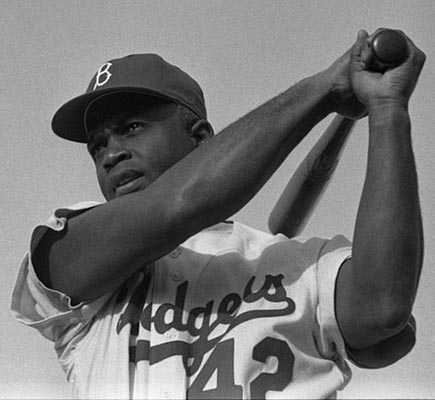
Jackie Robinson


January 31 …
Jackie Robinson stands as one of the most transformative figures in American history, not only for his achievements on the baseball field, but for the cultural and moral shift his career helped ignite.
Born on January 31, 1919, in Cairo, GA, and raised in Pasadena, CA, faced racial inequality from a young age, while nurturing an impressive array of athletic talents. At UCLA, he distinguished himself as a rare four-sport letterman, excelling in baseball, football, basketball, and track. These formative experiences not only honed his competitive spirit, but also instilled in him a steadfast resolve to challenge the unjust barriers confronting Black Americans.
Robinson’s debut in Major League Baseball in 1947 with the Brooklyn Dodgers not only shattered the color barrier, but also marked a pivotal moment in American sports. His signing was orchestrated by Dodgers executive Branch Rickey, one of Robinson’s most significant mentors, who sought not only athletic prowess, but also the emotional fortitude to withstand the harshness of bigotry. Robinson bore this heavy burden with remarkable composure, his upbringing, military service, and profound sense of personal dignity transforming pressure into extraordinary performance, which earned him widespread respect.
On the diamond, Robinson transformed the game with his aggressive play, unparalleled speed, and strategic intelligence. He injected new energy into baseball, daring pitchers and defenders alike with his bold base running and indefatigable competitiveness.
His remarkable accolades included “Rookie of the Year” in his first season, a “Most Valuable Player” award, several league championships, and a World Series title. These were achievements that transcended sporting milestones to symbolize victories for integration in American society.
Beyond the field, Robinson emerged as a compelling advocate for civil rights and social justice. He utilized his prominent platform to denounce segregation, discrimination, and inequality, collaborating with civil rights organizations and engaging directly with political leaders. Unlike many athletes of his time, Robinson refused silence, fearlessly writing, speaking, and campaigning for systemic change despite potential backlash. His activism extended the influence of his athletic career into the broader quest for equality in American life.
Robinson’s legacy is further solidified by the numerous honors bestowed upon him during and after his lifetime. He was inducted into the Baseball Hall of Fame, his uniform number — 42 — was retired throughout Major League Baseball. As an exception to the retired-number policy, MLB began honoring Robinson by allowing players to wear his number 42 every April 15, Jackie Robinson Day, which is an annual observance that started in 2004.
Robinson received a multitude of national awards acknowledging both his athletic achievements and his contributions to civil rights. These accolades reflect the profound impact he left behind, acknowledging that his courage reshaped not only a sport but also the cultural landscape of the nation.
Today, Robinson is celebrated as a beacon of perseverance, integrity, and transformative leadership. His legacy continues to resonate in the ongoing integration of sports, the activism of contemporary athletes, and the broader understanding of how individual courage can drive societal change.
The life of Jackie Robinson exemplifies how excellence, coupled with steadfast moral conviction, can reshape history and expand the horizons of possibility for future generations.