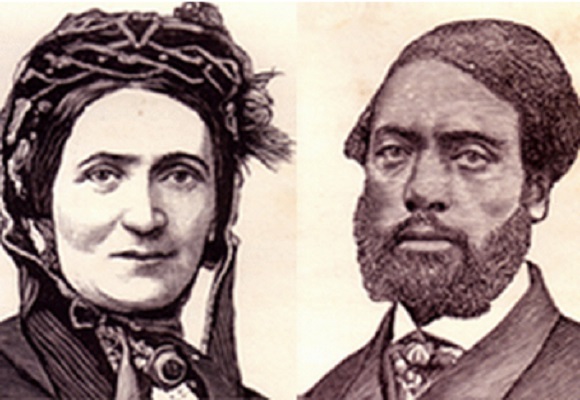
Ellen & William Craft


December 25 …
Listen to this story:
Ellen and William Craft were an extraordinary couple whose daring escape from slavery became one of the most famous and legendary stories of the Underground Railroad. On December 25, 1848, they successfully ended their trip out of slavery to freedom north of the Mason Dixon line.
Born into slavery in Georgia in the early 1800s, Ellen was a house slave, and William was a skilled carpenter. In 1848, the couple devised a bold plan to escape to freedom in the North. Knowing that their chances of success were slim if they simply ran away, they came up with a daring strategy. Ellen, who was light-skinned, would disguise herself as a white male planter, while William would pass as her slave. This clever ruse allowed them to travel openly and avoid detection, as Ellen posed as a sickly, wealthy man who needed a servant, with William playing the role of her slave.
Their escape journey was filled with peril, as they traveled by train and boat through the southern states, navigating the complex and dangerous systems of slavery. For nearly a week, they traveled under their false identities, eventually reaching Philadelphia, where they found sanctuary and freedom.
Their escape story became a powerful symbol of resistance and ingenuity, demonstrating the lengths to which enslaved people would go to gain their freedom. Once they reached the North, they continued their activism, speaking out against slavery and advocating for abolition.
The story of Ellen and William Craft did not end with their escape. After their arrival in the North, they became outspoken abolitionists, sharing their harrowing journey with audiences across the country.
In 1860, they published their memoir, Running a Thousand Miles for Freedom, which recounted their daring escape and the challenges they faced along the way. The book became a vital tool in the fight against slavery, helping to galvanize public support for abolition.
The Crafts eventually moved to England, where they lived in freedom for the rest of their lives, continuing their advocacy for the abolitionist cause. Their story remains a testament to the courage, resourcefulness, and resilience of those who fought for their freedom during one of the darkest periods in American history.