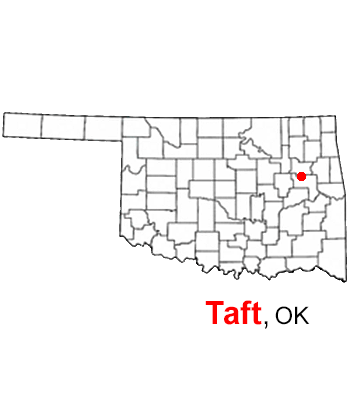
Taft, OK

September 26
Taft, OK
The town of Taft in Oklahoma stands as one of the few surviving all-Black towns established in the early 20th century, a rare and enduring symbol of African American autonomy and perseverance.
Founded in the late 1800s in what was then Indian Territory, the town was officially established on September 26, 1905 and became part of a broader movement of Black town-building across the Midwest and South. African Americans fleeing racial violence and discrimination sought to create their own self-sustaining communities, and Taft offered the promise of freedom, ownership, and opportunity. With its fertile land and strong communal spirit, Taft became a beacon for those determined to chart their own course in a deeply segregated nation.
In its early decades, Taft, OK thrived both economically and culturally. Businesses flourished along its main streets — barbershops, grocery stores, hotels, and cafes — all proudly Black-owned and operated. The town developed into a bustling center of enterprise, where residents could buy goods, seek services, and find employment without enduring the indignities of racial prejudice that marked most of Oklahoma and the broader South. This economic independence fostered a strong sense of pride and collective achievement among Taft’s citizens, who viewed their town as tangible proof that African Americans could build and sustain prosperous communities of their own.
Education was a cornerstone of Taft’s identity. Institutions like the Tullahassee Manual Labor School and later the Moton High School played central roles in shaping generations of young people. These schools provided academic and vocational instruction that prepared students to become skilled professionals, educators, and civic leaders. Education in Taft was not only about personal advancement but also about community uplift — arming young Black men and women with the tools to challenge systemic inequality and to strengthen the fabric of their society.
Culturally, Taft, OK became a center of spiritual life, artistic expression, and political engagement. The town’s churches doubled as hubs for organizing, music, and social progress. Gospel music filled the air on Sundays, while public gatherings and civic festivals helped sustain community bonds through the decades. In this sense, Taft embodied a broader African American cultural tradition — rooted in faith, music, and mutual support — that flourished even amid adversity. The community’s cultural legacy continues to echo today, influencing regional traditions and serving as a reminder of the resilience and creativity born from self-governance.
Several notable individuals have roots in Taft, adding to its historical and cultural significance.
- Sarah Rector, often called “the richest Black girl in America,” was among Taft’s most famous residents. After becoming wealthy from Oklahoma’s oil boom, she made her home in Taft and contributed to its reputation as a place of Black prosperity.
- Zella Black Patterson, an educator and civic leader, also hailed from the town and was instrumental in preserving its heritage and advocating for education within African American communities.
Over the years, Taft has also attracted political leaders, educators, and artists who have continued to uphold the town’s legacy of empowerment and progress.
Today, the town of Taft in Oklahoma stands as one of the last remaining all-Black towns in the United States, a living link to a transformative chapter in American history. While its population has dwindled, the town’s spirit endures through historical preservation efforts, cultural festivals, and a renewed interest in its heritage. Taft represents more than just a geographic location — it is a monument to African American resilience, vision, and the unyielding pursuit of freedom. Its story continues to remind the nation that progress often begins in small, determined communities that dare to imagine a better future.