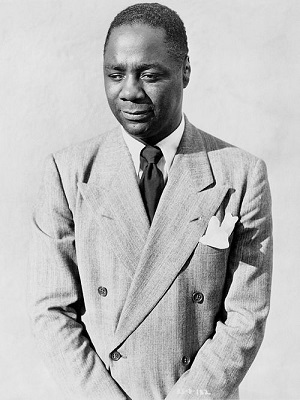
Canada Lee


March 3 …
Canada Lee was a groundbreaking actor, musician, and civil rights advocate whose work helped redefine African American representation in American film and theater.
Born Leonard Lionel Canegata on March 3, 1907 in New York City, and growing up in Harlem during a period of social and artistic awakening, Lee was drawn to performance from an early age. Before entering the world of acting, he achieved success as a professional jockey and later as a boxer, competing under the name “Canada Lee.” His experiences in the boxing ring gave him both the discipline and resilience that would later characterize his artistic career.
Lee’s entrance into theater came in the 1930s, during the height of the Harlem Renaissance — a time when African American art, literature, and performance flourished. His talent quickly caught the attention of leading figures in the performing arts, and he soon became one of the first Black actors to win prominent, non-stereotypical roles on the American stage.
Lee’s breakout performance came in Orson Welles’s 1936 production of Macbeth, known as the “Voodoo Macbeth,” in which he played Banquo. The production, staged by the Federal Theatre Project, was revolutionary not only for its all-Black cast but also for its powerful assertion that Black actors could carry classical drama with depth and sophistication.
In 1941, Lee earned critical acclaim for his role as Bigger Thomas in the Broadway adaptation of Richard Wright’s Native Son. His portrayal of a young Black man crushed by the forces of racism and poverty was both harrowing and deeply human, challenging audiences to confront the social injustices embedded in American life.
Lee’s performance solidified his reputation as an artist committed to truth and integrity, one who refused to perpetuate degrading stereotypes for the sake of success. His stage work helped open doors for future generations of Black actors, proving that African Americans could portray complex, leading roles in mainstream theater.
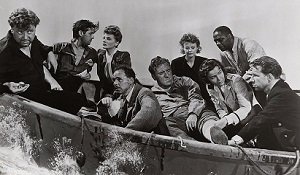
20th Century Fox publicity still (left to right: Walter Slezak, John Hodiak, Tallulah Bankhead, Henry Hull, William Bendix, Heather Angel, Mary Anderson, Lee, and Hume Cronyn in “Lifeboat”)
Lee later appeared in Body and Soul (1947), a powerful boxing drama that mirrored his own experiences and allowed him to address issues of corruption and racial inequality. Despite his growing fame, Lee faced backlash during the McCarthy era, when his outspoken advocacy for civil rights led to his being blacklisted.
Canada Lee’s legacy extends far beyond his performances on stage and screen. He was an outspoken critic of racial discrimination and a supporter of social justice movements, using his platform to advocate for equality in the arts and in American life. Though his career was cut short by his untimely death in 1952.
The influence of Canada Lee endures through the generations of actors he inspired — those who continue to seek truth, dignity, and purpose in their work. His courage in challenging both artistic conventions and social prejudice helped shape the evolution of American theater and film, making him a pivotal figure in the cultural history of the twentieth century.