
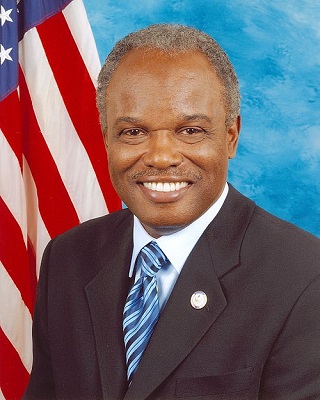
David Scott (Politician)


June 27 …
David Scott (Politician) was an influential politician whose decades of public service left a lasting impact on Georgia, Congress, and national debates surrounding agriculture, economic opportunity, civil rights, and social equity.
As one of the most influential African American lawmakers from the South in the early 21st century, Scott played a vital role in shaping federal policy while symbolizing the growing political significance of metropolitan Atlanta in American governance and culture.
Born on June 27, 1945 in Aynor, SC, Scott spent parts of his formative years in various states before firmly establishing his roots in Georgia. He graduated from Morehouse College in Atlanta, an esteemed institution renowned for cultivating generations of Black political and civic leaders, and later obtained a master’s degree from the Wharton School of the University of Pennsylvania.
Scott’s education in economics and business greatly informed his pragmatic and fiscally focused political philosophy. From an early age, he was inspired by figures linked to the Civil Rights Movement and the advancement of African American political representation in the South. Icons like Martin Luther King Jr., Andrew Young, and Shirley Chisholm instilled in him the belief that true political progress necessitated both activism and legislative compromise.
Scott embarked on his political journey in the Georgia House of Representatives before serving many years in the Georgia State Senate, ultimately securing a seat in the U.S. House of Representatives in 2002. Throughout his congressional tenure, he garnered national recognition for his contributions to agricultural policy, food assistance initiatives, financial reform, and economic development.
In 2021, Scott made history as the first African American chairman of the House Agriculture Committee, a milestone considered both symbolically and politically significant due to the committee’s influential role in shaping rural America. He championed farmers, nutrition assistance programs, and rural investments while advocating for voting rights protections, healthcare access, and infrastructure improvements.
Scott’s contemporaries included fellow Georgia lawmakers like John Lewis, Sanford Bishop, Hank Johnson, and Nikema Williams, along with national Democratic leaders such as Hakeem Jeffries and James Clyburn.
Throughout his public life, Scott was known as a pragmatic Democrat who frequently sought bipartisan collaboration while steadfastly upholding civil rights and economic equity. He admired public figures like John F. Kennedy and Martin Luther King Jr. for their leadership amidst national divisions and societal change.
Scott also served as a mentor to younger Georgia Democrats and local officials, who viewed his extensive career as a testament to persistence and institutional knowledge. His legislative approach reflected a blend of Southern political traditions and the broader legacies of the Civil Rights Movement.
Beyond his political achievements, Scott’s career embodied the growing political influence of African Americans in Georgia, a state that underwent a remarkable transformation during his lifetime. It evolved from a hub of segregation-era politics to a key player in modern American democracy.
Scott received numerous accolades throughout his career from agricultural organizations, civic groups, educational institutions, and civil rights advocates. He was often recognized for his unwavering support of farmers, minority-owned businesses, and underserved communities, earning respect from colleagues for his longevity and leadership within Congress.
Following Scott’s passing in April 2026, tributes from political leaders across Georgia and the nation celebrated his nearly five decades of elected service and his vital role in enhancing African American representation in federal policymaking.
The legacy of David Scott (Politician) remains intertwined with his efforts to connect economic policy with social justice and his historic position as a Black Southern lawmaker who significantly influenced modern American political history.