
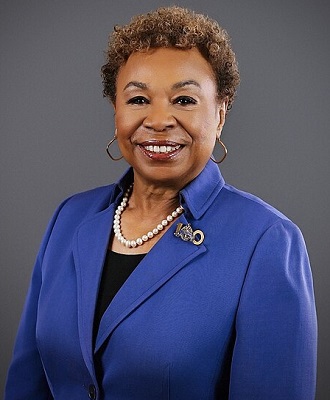
Barbara Lee


July 16 …
Barbara Lee is a long-serving U.S. Congresswoman whose career has been defined by principled advocacy for peace, social justice, and civil rights.
Born on July 16, 1946 in El Paso and raised in Bakersfield, Lee grew up in a military family, which significantly influenced her thoughtful approach to foreign policy. She earned a bachelor’s degree from California State University, East Bay, followed by a Master of Social Work from the University of California, Berkeley. Her early involvement in community organizing and activism laid the foundation for her commitment to public service and grassroots political engagement.
Lee began her political career by participating in the presidential campaign of Shirley Chisholm, the first Black woman elected to the U.S. Congress. She later became involved with the Black Panther Party. Following her role as chief of staff for U.S. Representative Ron Dellums, she served in the California State Assembly from 1990 to 1996 and held a position in the California State Senate from 1996 to 1998.
One of Lee’s most notable accomplishments occurred in 2001 when she cast the lone vote in Congress opposing the authorization for military force in the aftermath of the September 11 attacks. This courageous decision, initially met with criticism, later garnered widespread recognition for its foresight.
Throughout her congressional tenure representing California’s 12th district, Lee has been a staunch advocate for healthcare access, housing equity, HIV/AIDS awareness, and anti-poverty initiatives. Her leadership in peace and social justice policies has earned her numerous accolades, including recognition from the NAACP Image Awards and various humanitarian advocacy groups.
Lee’s political and moral inspirations include civil rights trailblazers like Shirley Chisholm and Barbara Jordan, whose eloquence and integrity have influenced generations of lawmakers. Among her contemporaries are figures like Nancy Pelosi and Maxine Waters, with whom she has collaborated on progressive legislative initiatives. She has inspired and supported younger political leaders and activists, particularly in movements centered around racial justice, women’s rights, and anti-war advocacy.
Lee’s broader impact on American society and culture stems from her unwavering commitment to moral conviction in policymaking, even in the face of political unpopularity. Her advocacy has significantly shaped national discussions surrounding war powers, social equity, and government accountability, underscoring the essential role of dissent in democratic governance.
By blending legislative service with activist principles, Barbara Lee has emerged as a defining figure in modern progressive politics and a symbol of principled leadership in American history.