
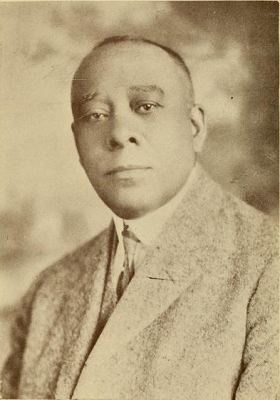
George Cleveland Hall


February 22 …
George Cleveland Hall was a pioneering physician, civic leader, and institution builder whose life’s work helped shape the trajectory of African American social justice, professional advancement, and cultural development in the late nineteenth and early twentieth centuries.
Born on February 22, 1864 in North Carolina during the final months of the Civil War, Hall emerged from the constraints of Reconstruction-era racism to become a prominent Black medical and civic leader in Chicago. His career seamlessly blended medicine with activism, as he perceived healthcare not merely as a profession but as a means for racial elevation, institutional empowerment, and community self-determination.
Hall pursued higher education at Lincoln University, one of the nation’s earliest historically Black colleges, where he absorbed a classical education infused with racial pride and leadership. He later obtained his medical degree from Bennett Medical College in Chicago.
Hall’s intellectual growth was influenced by contemporary debates surrounding Black progress and citizenship, as well as the philosophies of leaders like Booker T. Washington, whose focus on institutional development and economic self-reliance deeply resonated with him. However, Hall was also cognizant of the more confrontational civil rights approaches championed by W.E.B. Du Bois, navigating a balanced path that combined professional excellence with a steadfast resistance to racial exclusion.
In Chicago, Hall became a key architect of Black medical infrastructure. In 1891, he co-founded Provident Hospital and Training School for Nurses, the first Black-owned and operated hospital in the United States, at a time when African American physicians were barred from white hospitals and Black patients routinely denied care. Provident not only provided essential medical services, but also trained Black nurses and offered admitting privileges to Black doctors, thereby establishing a professional ecosystem that challenged systemic exclusion.
Hall’s leadership in the hospital movement paralleled that of civic activists like Ida B. Wells and Daniel Hale Williams, both of whom were engaged in Chicago’s reform circles, helping to transform the city into a hub of Black institutional power during the Great Migration.
Beyond the realm of medicine, Hall played a vital role in shaping Chicago’s Black civic and cultural landscape. In 1915, he was a founding member — along with Carter G. Woodson, Alexander L. Jackson, and others — of the Association for the Study of Negro Life and History. And Hall was instrumental in founding what would eventually become the Chicago Urban League and actively participated in community organizing efforts addressing housing discrimination, employment inequality, and public health disparities.
He mentored younger physicians and civic leaders, promoting professional discipline alongside social responsibility. His influence extended to subsequent generations of Black professionals who would later contribute to the intellectual and cultural blossoming associated with the early 20th century, including figures linked to the emerging Black Renaissance movements. Hall’s social connections encompassed reformers, clergy, journalists, and educators who viewed institution-building as a form of resistance and a pathway to dignity.
Although not in pursuit of fame, Hall’s accomplishments earned him significant respect within both professional and civic networks. Provident Hospital remains his enduring legacy, and his leadership was acknowledged through appointments to medical societies and civic boards that were often hesitant to include African Americans. His influence is reflected not in formal accolades, but in the lasting institutions he helped create and the professional opportunities he opened.
By integrating medical excellence with strategic activism, George Cleveland Hall advanced American social justice not only through protesting injustice but also by establishing parallel systems of care, training, and leadership that reshaped society, fortified Black cultural life, and secured his place in the broader narrative of American reform.