
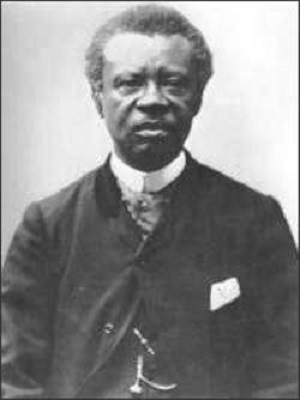
Edmond Dédé

November 20 …
Edmond Dédé was a pioneering composer and violinist whose life and work challenge narrow ideas about American music in the 19th century.
Born in New Orleans on November 20, 1827, to free people of color, Dédé grew up in a vibrant city infused with a rich blend of African, Caribbean, French, and Spanish traditions, crafting a unique musical landscape. From an early age, he showcased remarkable talent on the violin, drawing inspiration from European classical forms as well as the prevailing Creole musical culture in pre-Civil War New Orleans. His early experiences reflected the paradox of freedom and constraint faced by Creoles of color—educated and cultured, yet still limited by the racial barriers in the United States.
In search of greater artistic opportunities, Dédé left the United States for France as a young man, a move that would significantly shape his career. In Paris, he immersed himself in the Romantic-era classical music scene, studying composition and violin with esteemed instructors and honing his skills through rigorous training. Influenced by French Romantic composers and orchestral traditions, as well as the operatic and symphonic styles of European concert life, he adeptly fused his European education with the lyrical sensibilities of his New Orleans heritage, combining expressive melodies with formal discipline.
After completing his studies, Dédé settled in Bordeaux, dedicating decades to his career as a professional musician, conductor, and composer. As a leader of orchestras in theaters and concert halls, he built a reputation for reliability and musical intelligence. During this time, he created a substantial body of work that encompassed orchestral pieces, chamber music, songs, and at least one large-scale opera. His compositions demonstrated a profound understanding of harmony, orchestration, and dramatic structure, firmly situating him within the European classical tradition while subtly pushing its boundaries.
Despite his accomplishments in Europe, Dédé remained largely unknown in the United States during his lifetime, reflecting the realities of racial exclusion and the underrepresentation of Black classical music history. He lacked the public acclaim and institutional recognition that many of his white contemporaries received, and much of his music remained unpublished or unperformed for generations. Nonetheless, his enduring professional career in Europe stands as a remarkable achievement for a Black composer born in America during the 19th century, showcasing both artistic excellence and personal resilience.
In recent decades, Dédé’s legacy has gained significant recognition as scholars, musicians, and cultural institutions have rediscovered and revived his work. Performances and recordings of his compositions have unveiled a composer of extraordinary sophistication, helping to reshape narratives about the origins of American classical music.
Dédé now occupies a place alongside other overlooked Black composers, illustrating that individuals of African descent played an active role in the global classical tradition long before the 20th century.
Today, Dédé is celebrated as a vital figure in both American and transatlantic cultural history. His life exemplifies how Black artistry persevered and evolved despite a lack of recognition at home, and his music serves as a powerful reminder that American musical identity has always been richer and more intricate than commonly perceived.
Through renewed attention to his work, the contributions of Edmond Dédé continue to enhance our appreciation of American music, cultural exchange, and the ongoing struggle for artistic visibility.